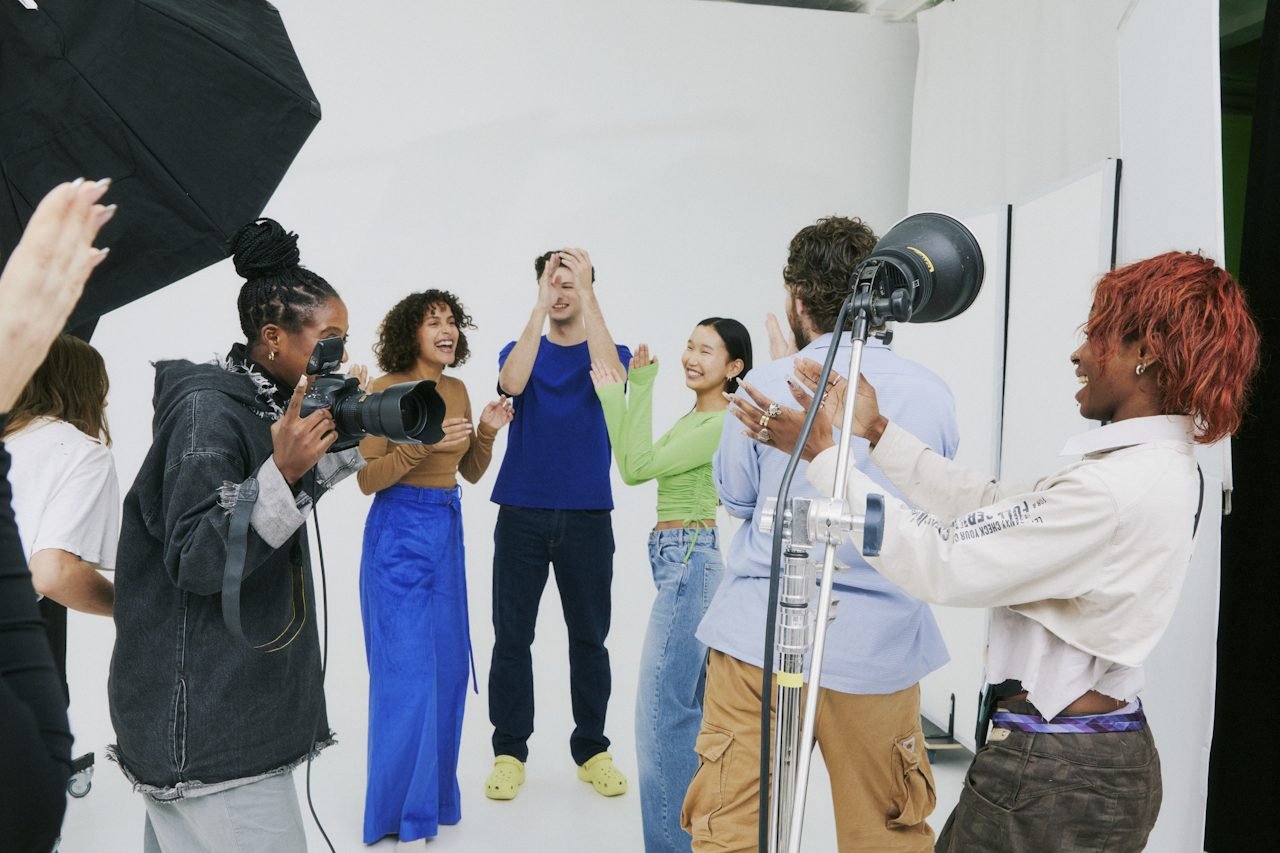


















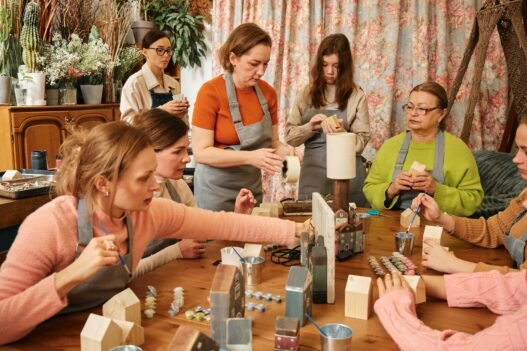

From the outside, a community workshop looks like a table, some chairs, and a pile of supplies. Maybe a hand-lettered sign taped to the door. Maybe a playlist humming in the background. It reads as casual. Easy. Something you just show up to. What you don’t see is the quiet architecture holding it up—the emails, the late-night kit-packing, the emotional weather reports you learn to read in a room full of strangers. By the time the first person walks in, the workshop has already been happening for days.
If you’re thinking about running a workshop or maybe you want your next workshop to run a little smoother, here are a few things worth knowing before you set up the table and open the door.
1. The Workshop Starts Before Anyone Shows Up
Your workshop doesn’t start when you open the doors. Long before the big day, there’s a lot of work happening in the background that no one will ever see, and it’s up to you to get it done and set the tone.
First, there are the obvious expenses. Venue rental. Materials. Instructor fees. The small, miscellaneous costs that stack up fast. Depending on the focus of your workshop, it might be worth looking into grants as part of how you make it possible.
Funders usually care about who benefits, not just what gets made. Does the event serve a specific community? Is it accessible to people who don’t usually get invited into these spaces? Are you working with marginalized groups, offering low-cost or free spots, or creating something that has a life beyond a single night?
Thinking this way doesn’t just help with grant applications—it can also clarify why you’re running the workshop in the first place, and who you’re really trying to make space for.
You’re already shaping how the night will feel in emails, DMs, posters, and printed materials. It lives in how you talk about the event, how you describe the space, and how you frame what people will walk away with at the end of the night.
You want people to feel invited into something achievable, not like they need to be “good” at something to belong. A mix of skill levels is ideal because it gives people reasons to talk, to help each other, and to turn a room of strangers into something closer to a table.
That’s why a low barrier to entry matters. Not just for beginners, but for anyone who’s showing up a little unsure of where they fit.
Beyond logistics, there’s the labour of welcome. Signage that signals the vibe. A room that actually delivers on the promise you made online. Light, music, somewhere for coats to land, somewhere for people to exhale.
Planning for a workshop means thinking through the small, unglamorous details. Sit down and make a real list of possible barriers, awkward moments, and friction points—and decide ahead of time how you’ll soften them when they show up.
2. You’re Not Just Teaching a Skill — You’re Hosting a Micro-Community
You don’t need “instructor” energy so much as “host” energy. If people wanted a class, they would’ve signed up for one. They didn’t. They signed up for an evening.
That means quietly setting the parameters. Not hard rules—etiquette. Is talking part of the experience, or a distraction? Is wandering encouraged, or does it pull people away from something they’ll need for the rest of the night? Do you need moments of quiet, and if so, how do you ask for that without turning into a taskmaster? People will look to you to figure out what’s allowed. Try to set it with soft authority.
You also have to plan for different learning speeds. Some people will struggle, and you want to support them without slowing the flow for everyone else. The goal is to help each person get what they came for, even if they arrive at it in different ways.
There’s real power in learning each other’s names. Inside a workshop, you’re not just teaching a skill—you’re building a small, temporary community. One you hope extends beyond a single night. You want people to leave having made something, met someone, and feeling like coming back would be easy.
3. Someone Will Always Arrive Carrying More Than a Craft Project
Something that you may not have considered: People don’t arrive empty-handed. They show up carrying nerves, grief, burnout, loneliness, social anxiety—whatever the day handed them before they walked through your door. None of it checks in at the coat rack.
For some people, making something with their hands becomes a way of making space in their lives. The process gives their thoughts somewhere to land. You don’t have to name any of this out loud, but it helps to recognize when the room shifts from “craft night” into something quieter and more personal.
Your job isn’t to fix what people bring with them. It’s to hold the space steady enough that they can move through it on their own terms. That’s the gentle art of hosting a room without turning into everyone’s therapist—being present, being kind, and knowing when the most useful thing you can offer is simply a table, a tool, and a little time.
4. Time Will Warp in Strange and Unfair Ways
Timing is wildly hard to plan, even with a written schedule and a carefully mapped-out evening. The activity you budgeted forty minutes for wraps up in ten. The five-minute demo at the top of the night quietly until it’s eaten half an hour.
Your schedule is less a rulebook and more an outline. You can use it to get a sense of what might happen, but not to dictate what has to happen. The real skill is learning how to read the room.
When a demo runs long, it’s often because you forgot how much of that skill now lives in your hands instead of your head. What feels obvious to you is brand new to everyone else. When something finishes too fast, you don’t panic—you pivot. You ask a better question. You invite people to experiment. You give the room a little more space to breathe.
Running a workshop means learning how to move with the night instead of trying to pin it down.
5. Supplies Are a Social Experiment Disguised as Logistics
People are weird about stuff. Some people have a lack mentality where they think they have to snatch up everything they can before it’s scooped up by someone else. Other people will take the things they might need, but feel bad about it because what if they’re taking too much. And others still won’t take anything because they’re shy, or worried, or just trying not to take up too much space.
This is something you have to take into consideration as well. You can source enough materials to accommodate everyone—maybe even a little more than you think you’ll need, just to be safe.
Having all of these different types of people sitting at the same table can create quiet tension, so it helps to have a plan to keep things feeling fair—and to make sure everyone has what they need to fully participate in the evening’s activities.
Some tools quietly become power. Scissors, rotary cutters, glue guns, the one good marker—whatever there’s only a few of. Whoever sits closest controls the flow, even if they don’t mean to. Suddenly people are waiting, hovering, apologizing for interrupting, or going without.
If you don’t design for this, the room can slide into a weird little hierarchy built entirely out of office supplies. The fix is simple but intentional: spread the “important” tools out, build sharing into the instructions, or turn passing things around the table into part of the rhythm of the workshop. You’re not just distributing scissors—you’re ensuring equal participation.
6. The Quietest Person Often Leaves With the Biggest Win
When you picture your event, you’re probably imagining a room full of animated people—loudly chatting, showing each other what they’re making, talking about how much fun they’re having. That kind of energy does happen. But it isn’t the only metric of success.
There’s a real difference between loud participation and deep engagement. Quiet doesn’t automatically mean bored or disconnected. So if a hush settles over the table, try not to panic—at least not right away.
Boredom is usually obvious, and you should have a plan for it. Learn when to step in—watch faces, track progress, and notice when hands stop moving. If people are rolling their eyes or stalling out on their projects, it’s time to fall back on your backup plan. Redirect the room. Offer more hands-on help. Ask what’s tripping them up. Figure out what’s actually going on with the crowd, and adjust in real time.
Confidence doesn’t always look like talking. Sometimes it looks like someone leaning in, hands busy, completely absorbed in what they’re building. You might watch that person leave glowing, even if they barely said a word all night.
7. You Will Do a Lot of Work Nobody Will Ever See
If your workshop is planned for one hour then you better be prepared for three hours of work, because there’s a lot happening in the background that your participants will never see. And that’s a good thing!
You want the night to feel simple and well organized. But make sure you’ve actually budgeted for your time—the hours you invest before, during, and after—so you’re not rushing at the last minute or underpaying yourself to make a “killer workshop” bhappen. Your time has value.
You’ll probably need time to set up the room: a quick tidy, organizing the table, laying out materials, and troubleshooting any equipment you might need. There are also the late-night emails that stitch the whole thing together—confirming details with the venue, vendors, instructors, and anyone else helping you host the event.
There’s a lot of administrative work beneath the magic—tracking expenses, grant applications, time, signups, and follow-ups. You need to pay attention to these things if you want to measure your real success. A good turnout isn’t the only metric that matters.
There’s also work that happens after you wrap up for the night. Whether your workshop was a hit or a flop, you still have to clean up: sweeping floors, folding chairs, resetting the room.
If the night went well, those last few tasks can feel strangely intimate. They give you a quiet moment to take stock, breathe, and give yourself credit for an evening people will carry with them long after they leave the space.
If the night didn’t turn out the way you hoped, that same quiet can feel heavier. That’s when it helps not to be alone—having a friend or volunteer around for setup and teardown can turn a hard ending into something shared instead of something you carry home by yourself.
8. Success Rarely Looks Like a Perfect Finished Object
If some people leave with wonky stitches, chunky glue, or uneven folds, it usually doesn’t matter. Some won’t finish at all. Finishing isn’t the point. Sometimes the real win is that someone finally starts the thing they’ve been putting off for a long time.
Your workshop isn’t a class—it’s an experience. For someone practicing a new skill for the first time, those imperfect results can be a source of real pride. So don’t apologize for the rough edges. Let people leave glowing with what they made.
Measure outcomes in courage, not products.
9. The Workshop Doesn’t End When the Door Closes
The workshop isn’t over when people walk out with a finished project or a new skill. The night still has a second life—one you shape in how you talk about it. Whether it was a runaway success or a rough one, how you frame it becomes the version that travels.
You can leave a good taste behind through follow-up: DMs, comments, posts, newsletters that thank people for coming and invite them to share how the night actually felt—the flow, the vibe, the clarity of the instruction. Stay in touch with the people who taught alongside you, too. Their experience matters. Ask how supported they felt, how the room responded, and how communication worked on your end.
This isn’t just PR. It’s feedback. It’s how you get better, and how you decide whether you want to do it again.
When you share visuals, be intentional. Photograph the crowded end of the table. Capture people mid-laugh, mid-mess, mid-making. Take a group photo at the end of the night with everyone holding what they built.
And ask for testimonials. Not just to hype the next event, but to slowly establish yourself as someone who knows how to hold a room—online, on your site, and inside your real-world community.
Final Thought
Creating a workshop is not unlike building a temporary little world—one you shape for a single night, or return to again and again. Either way, it gets taken down, folded up, and packed away when the evening ends.
You want your audience to pack it away too. As a memory. As a good feeling. As the beginning of a new practice if they’ve just learned a new skill.
Everyone carries something forward, whether the night was perfect or imperfect. That’s part of the weight of hosting.
There’s something quietly radical about giving people a place to learn and make things together. You’re building community around something that matters to you—and sometimes, in the process, making it matter to someone else.
The real product at the end of the night isn’t what people hold in their hands. It’s the feeling of that small, shared world they take home with them.
→ Build your own temporary world. Tell us about it below.
→ Join The Edit for notes from the floor—what works, what doesn’t, and how people keep making space for each other.
AXO (she/her) is a multidisciplinary creator, editor, and builder of feminist media ecosystems based in Toronto. She is the founder of She Zine Mag, Side Project Distro, BBLGM Club, and several other projects under the AXO&Co umbrella — each rooted in DIY culture, creative rebellion, and community care. Her work explores the intersection of craft, technology, and consciousness, with an emphasis on handmade ethics, neurodivergent creativity, and the politics of making. She is an advocate for accessible creativity and the power of small-scale cultural production to spark social change. Her practice merges punk, print, and digital media while refusing to separate the emotional from the practical. Above all, her work invites others to build creative lives that are thoughtful, defiant, and deeply handmade.