










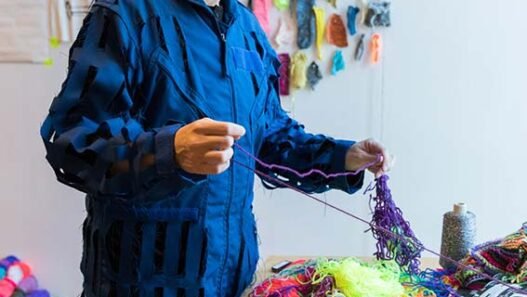


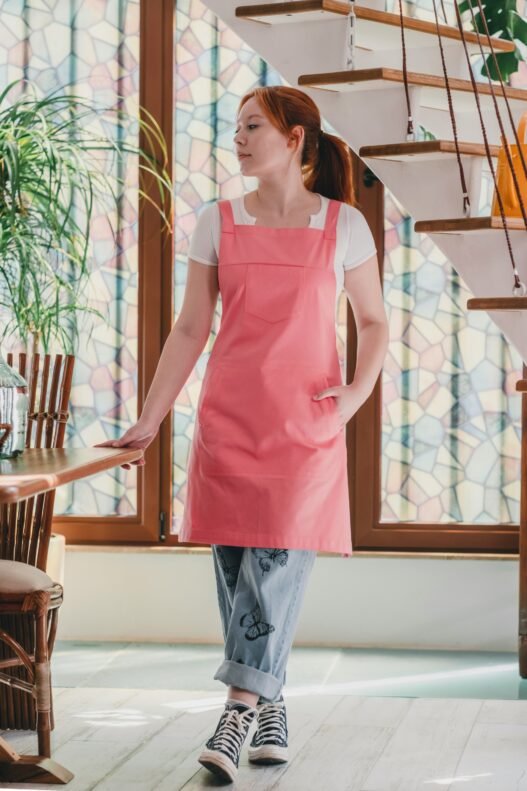
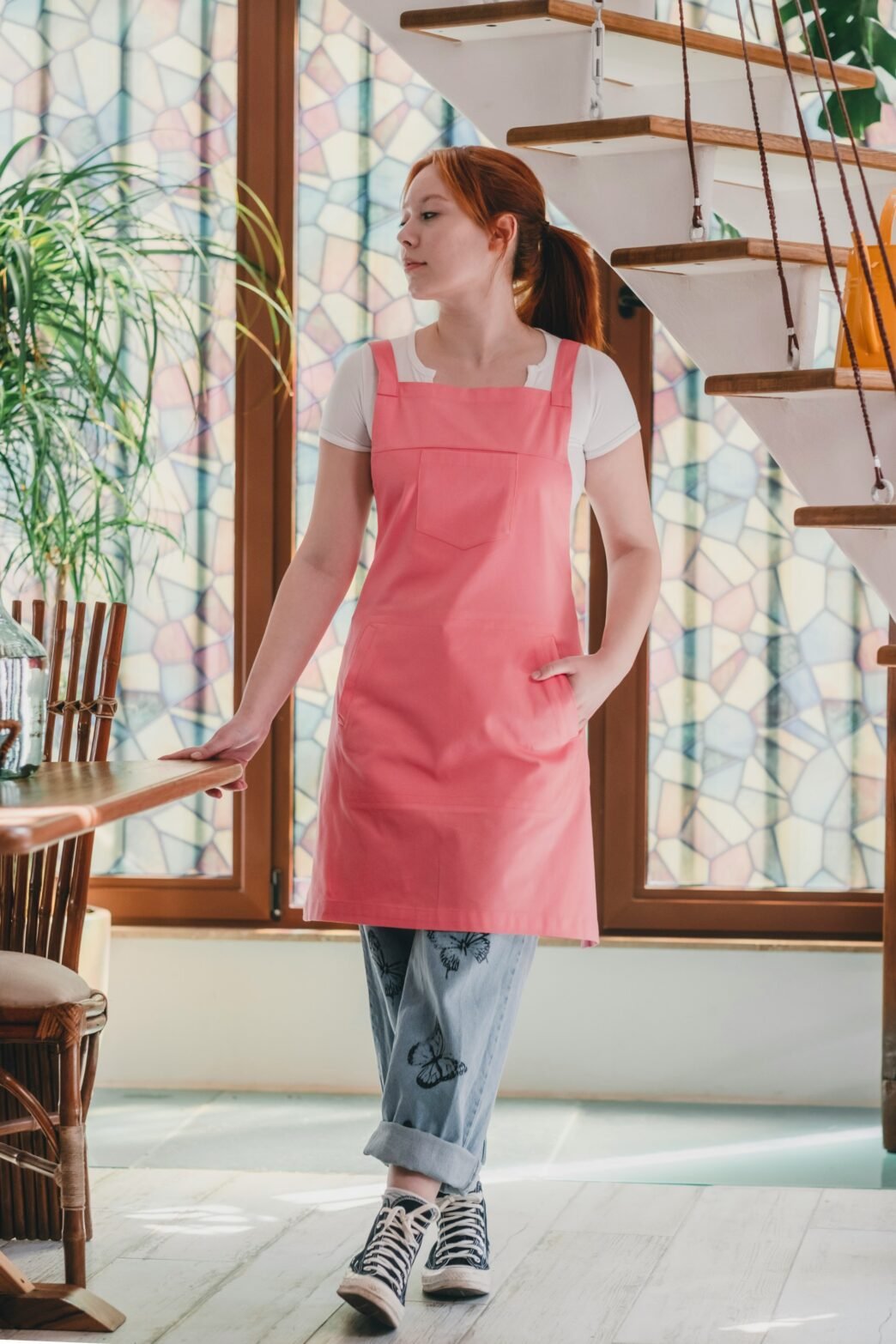
There’s a kind of quiet rebellion in practical clothing. A pocket deep enough to hold your phone and your keys. A sturdy strap. Fabric that can take a hit from paint, clay, grease, or tears — and still hold its shape. Feminist workwear isn’t a fashion statement; it’s a declaration of self-sufficiency. Not just about utility; it’s about agency. It’s the clothing of women who build, grow, and repair — not because it looks good in a flat lay, but because they need to move freely through the world.
The Apron as Manifesto
For centuries, the apron has been a contradictory garment. A symbol of domestic servitude and, later, of feminist reclamation. In one century, it was a uniform for invisible labour; in another, it became the chosen attire of artists, bakers, potters, and printmakers. The smock dress of the 1920s, the mechanic’s overalls, the painter’s denim apron splattered with colour — a visible shield of work, creativity, and defiance. The apron is practical, but it’s also deeply political. It blurs the line between home and studio, kitchen and factory, unpaid and professional.
Overalls and the Body in Motion
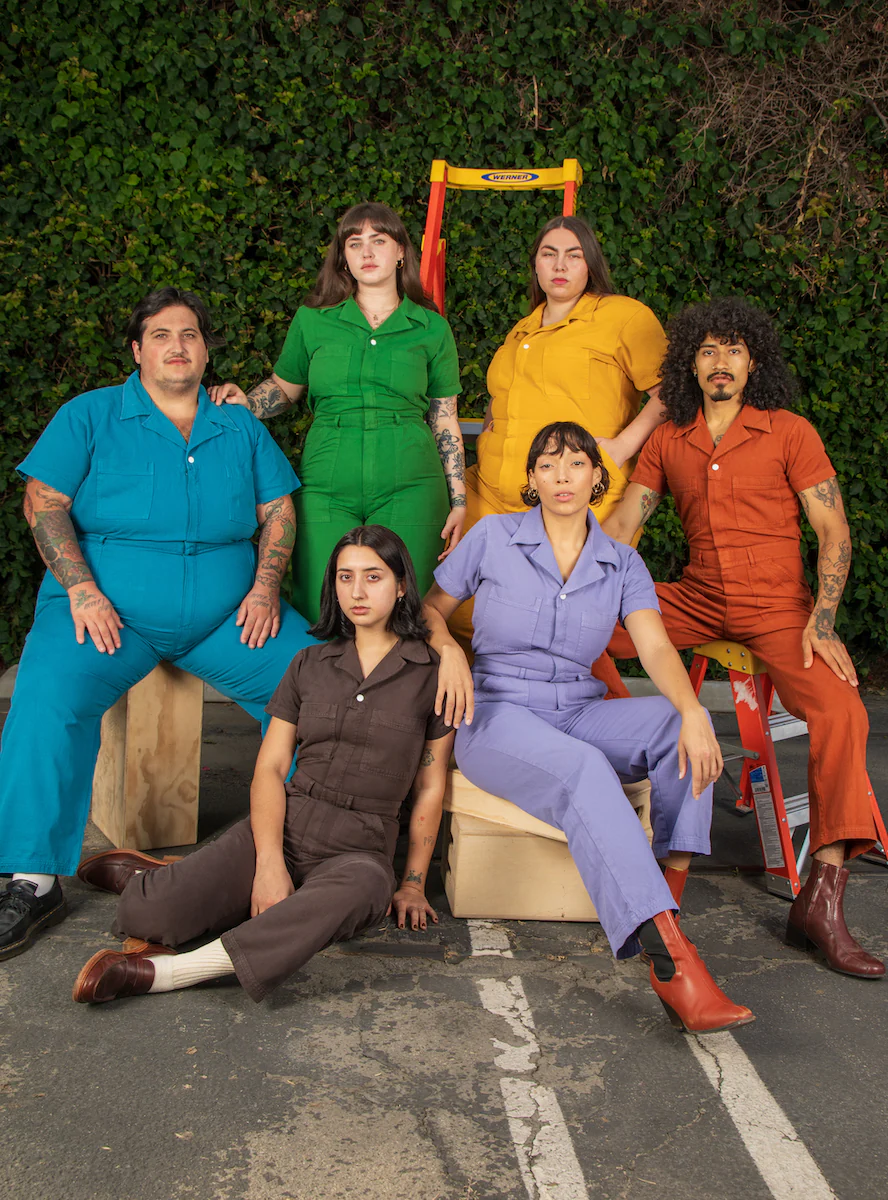
Overalls are the unsung hero of feminist fashion. They’ve swung between fields and factories, between Rosie the Riveter’s rolled-up sleeves and the indie craft fair circuit. There’s something subversive about wearing overalls in an office world — a refusal to compartmentalize work into the narrow categories that capitalism prefers. Overalls don’t care if you’re painting, gardening, coding, or welding. They signal readiness for whatever kind of labour you call your own.
Think of Judy Chicago in her studio, her smock covered in pigment; or the Red Tent movement reclaiming traditional “women’s work” as sacred labour. The apron became armour for a new kind of rebellion — the one that happens in the act of making.
When women wear workwear, they aren’t just borrowing from men’s closets — they’re rewriting the story of whose work matters. The goal isn’t to masculinize but to equalize: to make space for women’s physicality, utility, and unapologetic competence.
The Pocket Problem
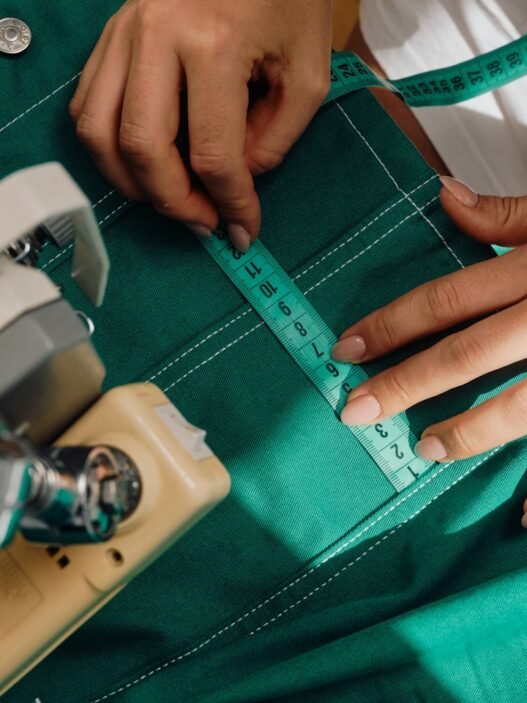
When we talk about “feminist fashion,” people often think slogan tees or power suits. But the real revolution might be in the pockets. Historically, women’s clothes were designed without them — not by accident, but by ideology. No pockets meant no autonomy; no place to hide money, keys, or letters. It was a way to keep women dependent, both literally and symbolically. The return of the pocket — on overalls, chore jackets, utility vests — is more than a trend. It’s a reclamation of self-sufficiency.
The politics of pockets is a politics of independence. It’s about the right to keep things close: a sketchbook, a wrench, a snack, a secret. It’s about what happens when you don’t need to rely on anyone else to hold your stuff — or your story.
A New Generation of Makers
Today’s feminist workwear movement has less to do with fashion runways and more to do with workbenches, sewing rooms, and shared studios. Modern feminist workwear designers are pushing that idea further. Brands like Dovetail (Portland, Oregon), Lucy & Yak (Brighton, UK), Big Bud Press (Los Angeles, California), and Canada’s own Birds of North America are reimagining what practical fashion can look like when made by and for women. Their pieces merge structure with softness — aprons made from deadstock linen, jumpsuits that nod to factory wear but with bold seams and better fits. The goal isn’t to mimic menswear, but to build our own uniform for a world we’re still reshaping.
One of the most visible champions of this new workwear movement, with its signature ampersand logo, is Hedley & Bennett, founded in 2012 by Ellen Marie Bennett — a former line cook who built an apron empire from inside a Los Angeles kitchen. Frustrated by the flimsy, ill-fitting aprons that dominated restaurant life, Bennett began designing her own: thick cotton, brass hardware, and — crucially — deep pockets that could hold knives, notebooks, and confidence. What started as a few prototypes for friends became the go-to apron for chefs, bakers, and makers around the world.

Today, her aprons appear on nearly every cooking show and in countless restaurants, from Top Chef to Chef’s Table. Bennett has written a memoir, Dream First, Details Later, that reads like a blueprint for creative rebellion — part business guide, part punk-rock pep talk. Her company’s ethos aligns perfectly with feminist workwear: durable design that celebrates labour, autonomy, and pride in getting your hands dirty.
Even beyond fashion, there’s a cultural shift happening. Workshops and collectives like The Workroom in Toronto are making the act of crafting — and the clothing we do it in — a feminist statement in itself. These spaces embody what She Zine has always championed: the return of labour as identity, creativity as resistance, and making as meaning.
Workwear also invites a conversation about visibility. There’s something radical about taking up space in clothes meant for labour, not leisure. Every stitch says: I make things. I fix things. I am part of the system that holds this world together. That’s a different kind of beauty — one grounded in function and defiance.
If fashion tells stories about who we are and what we value, feminist workwear is a manifesto you can wear. It rejects fragility. It honours the labour of hands, the mess of making, and the right to take up space with tools in your pocket. And that, perhaps, is the most subversive look of all.
What We Wear When We Work
Feminist workwear is not about nostalgia for a simpler life. It’s about reimagining what power looks like when it’s worn. It’s the outfit that holds your tools, your keys, your pen, your hammer — and your resolve. It’s the anti-performative, anti-fragile alternative to “girlboss” dressing: clothes that let you live the revolution, not just hashtag it.
The feminist future isn’t only written; it’s sewn, riveted, dyed, and built. The uniform of that future? It probably has paint on it. It definitely has pockets.
→ Subscribe to The Edit, She Zine Mag’s weekly newsletter.
Get stories like this delivered to your inbox — sharp, handmade, feminist media for the #NewGirlArmy. Join here.
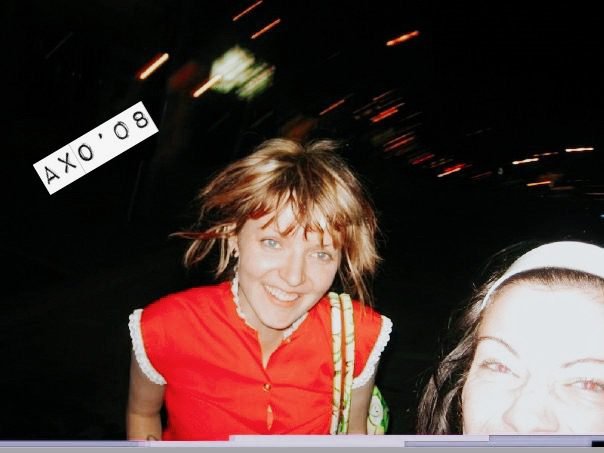
AXO (she/her) is a multidisciplinary creator and editor based in Toronto. She is the founder of She Zine Mag, Side Project Distro, BBLGM Club, and several other projects under the AXO&Co umbrella — each rooted in DIY culture, creative rebellion, and community care. Her work explores the intersection of craft, technology, and consciousness, with an emphasis on handmade ethics, neurodivergent creativity, and the politics of making. She is an advocate for accessible creativity and the power of small-scale cultural production to spark social change. Her practice merges punk, print, and digital media while refusing to separate the emotional from the practical. Above all, her work invites others to build creative lives that are thoughtful, defiant, and deeply handmade.