















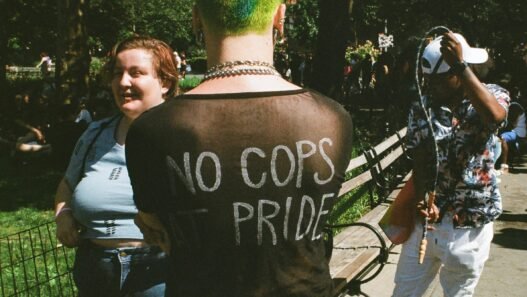




A Field Guide to Grants, Power, and Keeping Your Work Yours
How to Apply, What Actually Matters, and How to Not Lose a Week of Your Life
Grant writing has a reputation for being opaque, academic, and slightly hostile to people who make things, no matter where they’re applying. In practice, it’s less dramatic and more procedural. It’s a system built around patterns, and once you learn to recognize them, the work becomes more predictable and significantly less draining.
The most important part of grant writing happens before you write a single sentence.
For a lot of creative people, the bureaucracy itself is the first barrier. Translating a long-term project, a community effort, or a deeply personal body of work into a 250-word box can feel both limiting and unnatural. It’s easy to lose momentum before you ever reach the “submit” button.
Look at who they’ve funded before. Read their mission statement like it’s a piece of poetry instead of a legal document. Notice the patterns. Do they care about youth? About access? About innovation? About local impact? About “sustainability,” which can mean anything from environmental practices to not disappearing after a year.
This article isn’t about “winning” grants. It’s about understanding how the process actually works, what kinds of funding structures exist, and how to prepare in ways that make applications part of a sustainable creative or publishing practice rather than a recurring pain in the ass. We’ll break down the language, look at how decisions get made, and examine the power dynamics that shape who gets funded — and why.
Scroll to the bottom of the article for grant resources and recommended tools.
What a Grant Is, in Plain Terms
It isn’t free money, and it isn’t a prize. It’s a short-term financial partnership with specific conditions attached. Each one has a different personality. Learning to read that personality is half the work and understanding that upfront clarifies everything else.
Not all grants are the same species.
Some are public, funded by governments and arts councils. These often care about access, equity, and public benefit. Some are private, run by foundations or corporations, and shaped by a mission statement, a brand, or a donor’s legacy. Some are hyper-local, meant to keep a specific community or neighbourhood alive. Others are national or international, looking for scale, innovation, or visibility.
Then there are microgrants — small amounts meant to get things off the ground — and multi-year funding, which comes with longer timelines and heavier reporting.
Each one has a different personality. Learning to read that personality is half the work.
Every funding body has a dialect. Words like impact, reach, community, and innovation get used a lot, and they don’t always mean what you think they mean.
The trick isn’t to erase your voice. It’s to translate it.
If your work is about building a space for people who don’t usually get one, that’s access. If it’s about keeping knowledge alive and shared, that’s sustainability. If it’s about trying something that doesn’t quite exist yet, that’s innovation.
You’re not changing your project. You’re changing the lens it’s being viewed through.
So who actually gets funded? First, let’s dispel the myth of the “perfect applicant.” There isn’t one. Projects are selected because they align closely with a funder’s current priorities, capacity, and scope — not because they’re objectively “better” than the rest. In many cases, the successful applicant is simply more familiar with the process and how to present their work within it.
Rejection is not a judgement on your project’s validity or viability. It’s part of an extremely competitive system, often with very limited resources. If you plan to apply regularly, learning to treat rejection as routine — not personal — is one of the most practical skills you can develop.
You should familiarize yourself prior to beginning the application process.
- Public funding: Government agencies and arts councils. These usually emphasize public benefit, access, and accountability.
- Foundations and trusts: Private organizations with specific missions, often focused on culture, education, or social impact.
- Corporate or brand-funded programs: Typically tied to visibility, innovation, or community engagement.
- Local and community grants: Smaller amounts meant to support neighbourhood-based or grassroots projects.
Each type uses different language, but they tend to ask the same core questions.
Eligibility: The First Filter
Before you write anything, confirm that you’re actually eligible. And yes, you’ve got to read the fine print.
Look for requirements around:
- Location (city, province, country)
- Organizational status (individual, business, non-profit, collective)
- Career stage or years of operation
- Project type (media, arts, education, community programming, digital publishing)
A strong application won’t get past a technical mismatch. This step alone saves hours of wasted work.
What Grant Applications Almost Always Ask For
Grant writing isn’t just writing. It’s documentation.
You’ll be asked for bios, work samples, budgets, proof of existence, bank information, letters of support, and sometimes things that feel like they belong in a passport office. The first time is the hardest. After that, you start building a personal archive.
This is where a “master file” becomes your best friend. A living document with your project description, your bio in three different lengths, your budget template, and your standard answers to the questions that keep coming back in slightly different fonts.
Think of it like a zine you keep remixing for different readers.
Most forms, regardless of who’s running them, revolve around a predictable set of sections:
- Project description: Your elevator pitch—what you’re doing and how it works in practical terms. You don’t have room for exhaustive detail, so aim for clarity over completeness. Practice with a friend: describe your project in a few sentences and see if they can accurately summarize it back to you.
- Rationale or need: Why this project should exist in its current context. This isn’t about why the work matters to you; it’s about who it serves and what gap it fills. Funders are generally looking for projects that extend beyond personal interest and demonstrate public or community value. Passion projects that don’t reach an audience need not apply.
- Audience or community: Who it’s for and how they engage with it. Define the specific demographic or community you’re reaching and the channels or methods you’ll use to reach them. Broad statements weaken this section. A clear outreach plan strengthens it. And be specific.
- Budget: What it costs and how the funding will be used. Assumptions aren’t enough here. Funders want to see itemized allocations that show where the money goes and why. If you’re not comfortable building a budget from scratch, using a reliable template is standard practice, not a weakness. Check out links at the end of this article for our recommended templates.
- Timeline: When the work happens and when it finishes. You can allow for reasonable flexibility, but your schedule should still show clear phases and milestones. Remember, it’s always better to show up early than late.
- Background or track record: Who you are and what you’ve done before. Keep it relevant. Funders don’t care how many years you worked as a waitress, but they do want to know about the art class that you took to refine your skill.
Many grants now ask about who you are, who you serve, and how your work fits into larger conversations about representation and equity.
This can feel empowering, but it can also feel uncomfortable. The best answers tend to be specific and grounded. Not slogans. Not declarations. Just a clear picture of the community your work is actually in conversation with.
Funders can usually tell the difference between lived connection and strategic language. So can readers.
Once you recognize this structure, you can start preparing reusable material instead of writing from scratch every time.

The Prep Work That Makes Everything Easier
Funding trends exist. Being aware of this doesn’t mean chasing the trend. It means understanding the landscape you’re walking through. Some doors open more easily at certain moments. Some stay closed longer than they should.
This isn’t cynicism. It’s literacy.
The most efficient grant writers don’t write more. They organize better.
A basic “grant kit” usually includes:
- A short, medium, and long version of your project description
- A bio or organizational profile in two or three lengths
- A standard budget template you can adjust per application
- A folder of work samples, links, and press mentions
- A list of past projects or outcomes
This turns each new application into an editing job, not a blank page.
Writing a Project Description That Actually Helps You
Every application asks some version of the same thing: What are you doing, and why should we care?
The trap is trying to sound impressive. The better move is to sound precise.
Instead of “This project explores innovative intersections between community engagement and creative production,” try saying what actually happens. Who shows up. What they do. What changes because it exists.
Clarity is more persuasive than poetry here. Save the lyrical stuff for your own work. Let the grant description be a clean window into it.
Avoid general language. Funders want to understand what will physically happen.
Clear answers usually cover:
- What will be produced (articles, workshops, issues, events, platforms, resources)
- Who will be involved (contributors, participants, audience)
- Where it will live (online, in print, in a space, in a community)
- What changes because it exists
If someone unfamiliar with your work can picture the project after reading this section, you’re doing it right. This is where practicing an elevator pitch will come in handy.
The Budget Section Is Not a Formality
This is the part everyone rushes, and it’s often the part funders look at first.
A budget tells them whether you understand the real cost of your own project. Labour. Materials. Time. Accessibility. Admin. Distribution. All the invisible work that doesn’t make it into the Instagram post.
When your numbers make sense, they signal care. They say: this person has thought this through. This isn’t a fantasy. It’s a plan.
You don’t have to be perfect. You just have to be honest.
Budgets signal seriousness.
A strong budget shows that you’ve accounted for:
- Labour (including your own time!!!!)
- Materials and production costs
- Distribution or hosting
- Accessibility or outreach
- Administrative or platform costs
Round numbers and vague categories raise questions. Clear, realistic line items build trust. Editable templates are great for this. We’ve included links to our favourite budgeting templates below.
Impact, Reach, and Other Common Terms
Funders often ask about “impact” and “reach.” These terms don’t always refer to large numbers or broad visibility. More often, they’re trying to understand who your work affects and how.
What usually want to know:
- Who benefits directly from this work (be honest and specific)
- How people will access it (where it lives, how it’s shared, and any barriers to entry)
- What kind of change, learning, or opportunity it creates (aspirational, but realistic)
How to Strengthen This Section
Specific, grounded examples are generally more persuasive than broad or abstract claims.
Letters of Support and Partnerships
These aren’t character references. They’re evidence of relevance.
Letters of support stop being awkward when you treat them like what they are: a way for other people to say, in their own words, that your work matters to them.
Good letters explain:
- How the writer knows your work and in what capacity
- Why the project matters to their community, organization, or field
- What outcomes or impact they reasonably expect to see
One clear, specific letter is often more effective than several generic ones. You can ask former instructors, collaborators, clients, colleagues, or professional peers. Avoid family members or personal acquaintances, as these typically carry less weight in formal review processes. We already know that your mom thinks you’re great.
Submitting Strategically Instead of Randomly
Applying to every opportunity you find is a fast way to burn out. A more sustainable approach is to treat grants as a system and not a scattershot effort.
A Practical Strategy
- Track deadlines in one place so you can see patterns and plan ahead. Group grants by type and eligibility to avoid repeated mismatches
- Prioritize opportunities that clearly align with your work and goals
A super simple spreadsheet is capable of tracking all of the information.
Over time, this approach builds a coherent funding history rather than a trail of disconnected applications.
What Rejection Usually Means
Most people don’t quit grant writing because they get rejected. They quit before they ever apply.
The forms look like they were designed by someone who doesn’t believe in feelings. The language is full of words like deliverables and outcomes and stakeholders, which all mean something very specific and absolutely nothing at the same time. It can feel like you’re being asked to prove you belong in a room you weren’t invited into. And that can be exasperating.
Here’s the quiet truth: grants aren’t a reward system. They’re an infrastructure system. They exist because institutions, governments, and foundations have decided that some kinds of work need scaffolding to survive in a world that doesn’t naturally pay for care, culture, or community.

You’re not asking for permission. You’re trying to connect your work to a structure that already exists.
Most grants fund a small percentage of applicants. Being declined often reflects limited budgets or shifting priorities, not the quality of the project.
Rejection emails are short. Silence is longer.
Both can make you question whether your work is legible, valuable, or even real. This is where it helps to remember that grants are designed to filter, not to affirm. They narrow. They don’t measure the full field.
Keep making the thing. The application is a side channel, not the main event.
If feedback is offered, use it. If it isn’t, treat the application as a draft you can refine and reuse.
What Changes After You’re Funded
Money comes with gravity.
You’ll have reporting requirements. Timelines. Sometimes language you have to use when you talk about the project publicly. None of this is inherently bad, but it does shape the work.
The key is knowing where you’re willing to adapt and where you’re not. A grant should support your project, not rewrite it.
Here are some of the responsibilities that come with funding:
- Progress reports or final reports
- Documentation of outcomes
- Sometimes specific credit or acknowledgement language
Remember to factor this work into your timeline. It’s part of the project, not an add-on.
When a Grant Isn’t Worth Taking
Not every grant is worth taking.
If the reporting requirements are heavier than the funding. If the values don’t line up. If the strings feel tighter than the support. Walking away is also a form of agency.
You’re allowed to choose which systems you engage with.
- Extensive reporting for very small amounts
- Restrictions that limit how the work can be presented or shared
- Values that don’t align with your project or community
It’s reasonable to walk away from these.
Tools That Make This Manageable
One-off applications are exhausting. A practice is sustainable.
Building a simple, labelled calendar of deadlines helps turn grants into a predictable rhythm rather than a recurring crisis. Reusing and refining your core materials makes each application an edit, not a reinvention. Just be sure you’re tailoring each draft to the specific funder, rather than sending the same version out repeatedly.
Most people who do this long-term rely on:
- A simple tracking spreadsheet or Notion board
- Reusable writing templates
- A standard budget file
- A calendar of recurring deadlines
A simple tracker. A writing template. A budget calculator. A folder where every past application lives, marked with notes about what worked and what didn’t.
This turns grant writing into an administrative practice instead of an emotional event. Something you get better at over time. Something you can share, teach, and pass on.
The Practical Bottom Line
The first grant is the hardest. After that, you have a history. A paper trail. A sense of how the system moves.
Over time, you stop feeling like you’re knocking on a door and start feeling like you know which rooms you actually want to walk into.
And somewhere along the way, the form stops being an enemy. It becomes another medium. A strange one, yes. But still a place where you can practice saying, clearly and without apology: this work matters, and I’m going to keep making it.
Grants don’t define the value of your work. They support it under specific conditions.
The most dangerous idea in the grant world is that being funded makes something “real.”
Your work is real when it exists in the world. When someone reads it, uses it, learns from it, or finds a piece of themselves inside it. The money just makes it easier to keep going.
Treat grants as one tool among many — alongside publishing, partnerships, sales, memberships, or other funding models — rather than the centre of your creative or editorial strategy.
Used well, they can create space to build something solid. Used poorly, they can eat time without moving the project forward.
Knowing the difference is the real skill.
There’s lots of grant templates on the internet, but this is our favourite. It’s inexpensive and the Etsy seller offers a setup service as well for an additional service charge. The service is a little pricy, but worth it if you want to get it done right and done quick.
If you’re looking for something that will work in Google Sheets you could try this one and this one if you use Notion.
This section includes affiliate links and we may earn a small commission.
Here are links for Canadian and American Federal grants and Ontario provincial grants. You will also find resources for how to find micro and local grants in your area.
🇨🇦 Canadian Federal Funding Sources
Canada Council for the Arts — national public arts funder offering project-based and professional development grants for artists, arts workers, and organizations.
Canadian Heritage (Heritage, Arts & Culture Funding) — multiple programs including the Canada Periodical Fund (supports magazines and digital periodicals) and Canada Arts Presentation Fund.
Building Communities Through Arts and Heritage – Local Festivals — federal support for events that present the work of local artists and communities (can be significant even at small levels).
Micro-grants (Canada Council term) — one-time, small-scale project grants (e.g., short creative activities).
🏙️ Ontario & Local Canadian Opportunities
Ontario Arts Council — provincial arts grants for Ontario-based artists, collectives and arts workers across many disciplines.
Toronto Arts Council — city-level funding with multiple project and operating support streams; often more accessible to local applicants.
City of Toronto Arts & Culture Grants — municipal cultural grants outside the TIC programs, used for community capacity, inclusion, heritage and cultural events.
Ontario Trillium Foundation — large provincial granting body supporting community-led projects across sectors including arts and culture (often larger but worth noting).
Ontario Government Funding Portal (Transfer Payment Ontario) — general listing of all provincial grants including arts, culture, and not-for-profit supports.
Ontario Creates — supports creative industries (publishing, media, digital content, film, etc.) including business development grants and incentives, useful for creative entrepreneurs.
Sankofa Square Community Grants — local community arts & music project funding in Ontario (multi-arts oriented).
Banff Centre Artist Fund & Scholarships — while tied to residency programs and training, they are a form of financial support for artistic work and professional development.
Alberta Arts, Culture & Community Grants
The Government of Alberta offers a searchable grants database that includes arts, culture, heritage, community, and diversity funding programs; it lists various grant streams relevant to local creative work.
Alberta Foundation for the Arts (AFA)
AFA supports individual artists and projects in multiple disciplines. For example, its Literary Individual Project Funding supports writers and arts professionals with specific creative projects.
British Columbia Arts Council (BCAC)
BCAC offers a range of programs including Arts Impact Grants (general project support), Arts Circulation and Touring, and Individual Arts Grants for visual, media, and craft artists.
Manitoba Arts Council (MAC)
MAC offers around 15 different grants to artists and cultural organizations in Manitoba across disciplines and project types, from creation to community presentations.
SaskCulture & Saskatchewan Arts Funding
SaskCulture provides a Find a Grant portal listing provincial funding programs for arts, culture, and heritage; some opportunities support festivals, community events, and partnerships.
Arts NB (New Brunswick)
Arts NB offers individual and organizational funding; for example, Artist in Residence grant opportunities help artists pursue specific projects and residencies in the province.
(Nova Scotia, Prince Edward Island, and Newfoundland & Labrador also have arts councils/creative funding; you can check provincial government culture or tourism pages for current opportunities.)
🇺🇸 Major Federal & National U.S. Grant Sources
National Endowment for the Arts (NEA) — the principal U.S. federal arts funder with multiple programs such as Grants for Arts Projects (supports organizations and some community initiatives), Research Awards, and many discipline-specific opportunities.
NEA Grant Search — searchable database for NEA funding opportunities and deadlines.
National Endowment for the Humanities (NEH) — federal funding for humanities-related arts, history, preservation, and cultural documentation projects.
Americans for the Arts Funding Resources — curated lists of national and state funding programs that include NEA, state arts agencies, and other federal opportunities.
🧭 Where to Find More & Micro/Hyper-Local Opportunities
- GrantWatch and similar databases aggregate art and culture funding, many of which include small community grants open to Canadian and U.S. applicants.
- Culture Days Funding Resources publishes rolling and event-specific funding opportunities across Canada.
- ArtsBuild Ontario offers guides to funding creative space and capital project resources in the province.
Tips for Finding Hyper-Local or Micro Grants
- Provincial Cultural Funding Portals: Many provinces (e.g., Alberta’s grants search) have searchable lists combining arts, culture, sport, heritage, and community supports.
- Municipal Arts Councils: Cities often run small project funds (e.g., municipal cultural grants in Vancouver, Calgary, Halifax) — check city culture or arts department pages.
- Community Foundations & Local Heritage Societies: Local foundations sometimes run small arts awards or micro-project funds specific to a town or region.
- Community Festivals & Cultural Networks: Groups like local multicultural councils or neighbourhood arts networks often share micro-grant notices via email lists or social channels.
AXO (she/her) is a multidisciplinary creator and editor based in Toronto. She is the founder of She Zine Mag, Side Project Distro, BBLGM Club, and several other projects under the AXO&Co umbrella — each rooted in DIY culture, creative rebellion, and community care. Her work explores the intersection of craft, technology, and consciousness, with an emphasis on handmade ethics, neurodivergent creativity, and the politics of making. She is an advocate for accessible creativity and the power of small-scale cultural production to spark social change. Her practice merges punk, print, and digital media while refusing to separate the emotional from the practical. Above all, her work invites others to build creative lives that are thoughtful, defiant, and deeply handmade.