














Fractal Time in the Studio
Time misbehaves in the studio. It folds in on itself, stretches thin, forgets to even exist. You sit down to finish that one half-done project and suddenly it’s midnight and you’re still finishing that one undone project, plus 3 others on the go. Your tea’s cold, your playlist’s on its third loop, and you look like a glitter bomb exploded in your face (did I even use glitter). Other days you orbit the table for hours doing absolutely everything except the thing.
For a neurodivergent brain, time isn’t a line. It’s a tide with moods, and frankly, we respect it. And so should you!
This piece isn’t about forcing that tide into submission. It’s about learning its geometry — the odd, intuitive logic that shows up the moment you stop pretending your brain works on “office hours”.
It’s how we function at She Zine, and we hope it helps you build a studio rhythm that feels like yours, not someone else’s idea of “productive.”
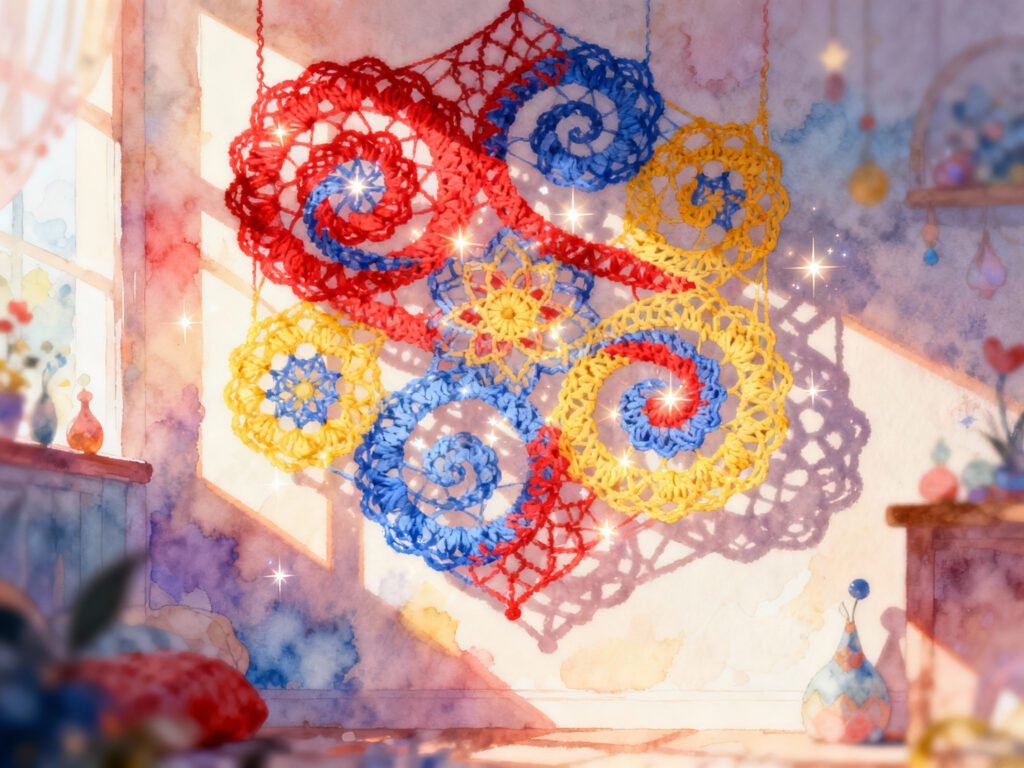
The Shape of Time
Fractals are endless patterns that repeat in miniature: a fern mirrors itself, a coastline looks the same whether you’re in space or barefoot on the beach. Some of us experience time the same way — looping, spiralling, doubling back until “focus” becomes a rabbit hole with its own gravitational pull.
Some people mistake this for chaos. But you and I know there’s rhythm under the static: intense bursts, spacious silences, flashes of recognition that feel borderline divine. You don’t need to flatten that pattern. Just witness it. It’s already making something.
Flow, Not Schedules
Most time-management advice assumes a steady pulse: start here, stop here, break exactly 30 minutes in. Neurodivergent flow doesn’t care. It’s weather — shifting systems, pressure drops, wild brilliance.
When you fall into flow, the prefrontal cortex chills out, dopamine lights up the room, and suddenly the work pulls you under in the best way. Hours vanish. But then comes the crash — the heavy grey fade no one warns you about.
It’s not laziness. It’s the tide going out. Rest isn’t optional; it’s the second half of the cycle. Let the wave collapse. Another one is already on the way.
The Studio as Ecosystem
A studio isn’t an office. It’s alive. Every sound, colour, and temperature shift rewrites your body’s idea of focus and changes the trajectory of your attention.
Think about the moment when a single beam of light hits your table and everything in you softens. Your breath deepens. Your brain unclenches. That’s your nervous system letting go. All your tension ebbs.
Fractals are the patterns in leaves, clouds, waves that literally calm the brain. That’s why standing under trees feels medicinal. Bring that pulse inside: shadows from a plant, the whirr of a fan, fabric catching the air.
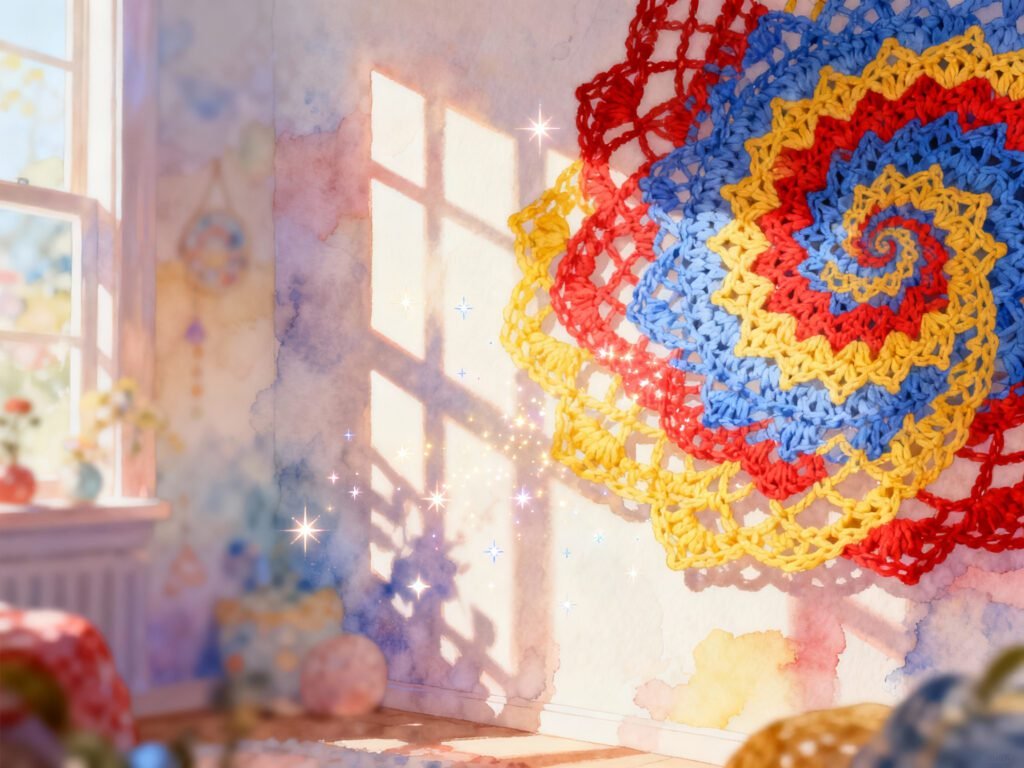
We’re not talking about minimalism. It’s about resonance — building a space that feels like a collaborator instead of a demand. That doesn’t mean that things have to be sparse in your creative space. They just have to cast the right metaphorical shadow.
In my own studio, I lean on a handful of apps as part of that ritual. Some keep gentle track of time; others play moody soundscapes or guided mindfulness audio for however long I want to stay in the work.
When the soft timer chimes, or the meditation fades out, that’s my cue too. The session ends with the sound — not with force, just a closing note.
Fractal Routines
Linear routines rarely survive creative reality. Whether you’re neurodivergent or otherwise. Fractal routines bend instead of break. They repeat without insisting on sameness. A little energy check-in each morning. A walk in the golden hour. A ritual before bed that clears the mental paint out of the brushes.
Projects can move this way, too — drifting out, drifting back, deepening with each loop. Spiral time isn’t regression. It’s orbit. You’re revisiting the idea from a smarter, higher angle.
Let things rest instead of abandoning them. Leave thread you can pick up later — a title, a line, a half-formed idea you’ll meet again when your brain’s in the right weather pattern.
In a way, that’s exactly what happened with She Zine. We put the project down in 2018, not because it failed — we actually paused at a high point — but because the spiral asked for space. Coming back now, we’ve carried forward what still felt alive and shed everything that didn’t. The core stayed; the shape changed. That’s the beauty of recursive work — it returns when you’re ready to meet it from that higher orbit.
Emotional Energy, Not the Clock
Productivity isn’t about hours punched in. It’s about usable energy. Neurodivergent days swing between electric clarity and fogged-out static. Track that, not the clock.
Do admin on your mushy days. Dive hard when you’re lit up. Guilt about inconsistency is just capitalism whispering in your ear. Steady output is a myth built for factories, not studios.
Fractal time values pattern over pace. Rest, distraction, daydreaming — these are legitimate modes of making.
I use apps for this as well. You might try a mood tracker or a CBT-style app to start mapping your own patterns — a kind of DIY mood atlas, as cheesy as that sounds. Over time, you’ll begin to see when your brain slips most easily into its creative gear, and when it’s better to step back. It’s not about control so much as learning your rhythm well enough to meet it halfway.
Science and Ritual
Timers can become charms. Candles, playlists, your favourite pen — all tiny cues that tell your brain, now we shift. Not hacks. Rituals.
Light the candle. Breathe. Begin.
Blow it out. The day dissolves.
Chaos learns to trust you through repetition.
Zines as Temporal Rebellion
Making a zine is slow on purpose. Fold, glue, cut, repeat. No algorithm measuring your speed. No productivity chart ranking your worth. Just your hands, your materials, your time.
Zine pages mirror neurodivergent thinking — tangents, collage, layered meaning, recursion. Mistakes? Texture.
Zines drag you out of capitalist time and into craft time — the timeline ruled by curiosity, sensation, and intuition.
Craftivism and Embodied Flow
Craftivism is focus turned outward — stitching, printing, carving as resistance. Every loop and repetition becomes both meditation and megaphone.
Hyperfocus feels safe here. The world narrows to yarn, ink, pressure, rhythm. Slowness becomes a political act. I will take my time. It is mine.
The Handmade Mind
Imperfection is the whole point. Uneven stitches, smudged ink, over-inked screens — they’re evidence of a nervous system in motion. Neurodivergent thinking leaves similar prints: asymmetry, intensity, surprise.
Craft culture already understands this. It centres process, not polish. Making by hand drags thought back into the body and lets touch anchor you when your brain wants to float away.
The Politics of Pace
Disability and feminist movements talk about crip time — nonlinear, body-first, adaptive. A refusal of the industrial fantasy of sameness. It’s not my favourite turn of phrase, but it’s a reclaimed one with a long history, and not mine to judge. The point is the pace: honouring the body instead of overriding it.
Working at your own speed plugs you into that lineage of creative dissent. Going slow is not indulgent. It is reclamation.
Neurodivergent time isn’t broken. It’s plural. That, I love.
Community as Fractal Network
Every zine swap, stitch-in, shared studio night forms another node in the pattern — tiny cells of creativity replicating into a network of care.
Find people who understand your tides. Build accountability around empathy rather than output. Sync when it feels right, drift when it doesn’t. The pattern will hold.
Learning Your Geometry
Creative time isn’t something you “manage,” neurodivergent or not. It’s something you map. Your brain already knows its orbits — its spirals, pauses, expansions. Listen to them. Sketch them. Track them if that helps.
We’ve given you some tips and resources in this article. Experiment. Discover what works for you or create your own solution and share in the comments below.
You don’t need to fix your mind. You need to trust its physics. Flow isn’t a miracle; it’s a habitat — messy, holy, and alive.
The more you honour your rhythm, the clearer it becomes.
The universe runs on fractals. Perhaps your studio does, too.
If you’re mapping your own creative geometry, don’t do it alone.
Subscribe to The Edit for ongoing tools and ideas, pitch us your perspective, and explore the many ways you can get involved with She Zine. Collaborative time is fractal too.
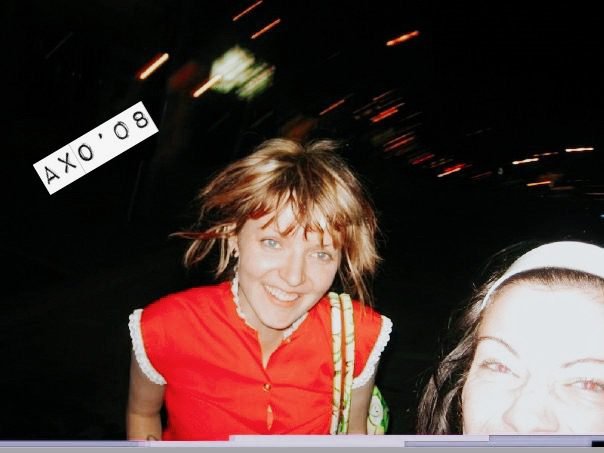
AXO (she/her) is a multidisciplinary creator, editor, and builder of feminist media ecosystems based in Toronto. She is the founder of She Zine Mag, Side Project Distro, BBLGM Club, and several other projects under the AXO&Co umbrella — each rooted in DIY culture, creative rebellion, and community care. Her work explores the intersection of craft, technology, and consciousness, with an emphasis on handmade ethics, neurodivergent creativity, and the politics of making. She is an advocate for accessible creativity and the power of small-scale cultural production to spark social change. Her practice merges punk, print, and digital media while refusing to separate the emotional from the practical. Above all, her work invites others to build creative lives that are thoughtful, defiant, and deeply handmade.