















There’s a special kind of magic that happens when creative people gather. Not to perform, not to sell, but to trade. A “Studio Swap” is part barter fair, part creative confessional, and part community reboot. Imagine a space buzzing with artists, makers, and zinesters, tables cluttered with half-used paint tubes, forgotten tools, and stacks of DIY publications. It’s the antidote to isolation and the perfect way to shake off creative stagnation.
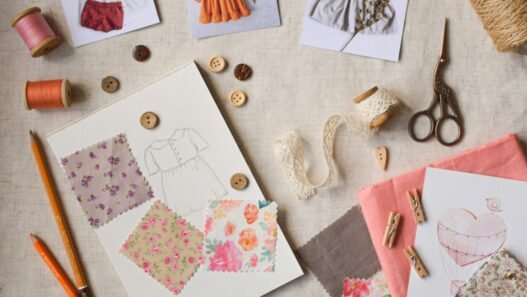
I’ve hosted a bunch of Studio Swaps over the years, including a whole series of mending parties. Everyone brought clothes that needed love — something to swap, something to fix — and we had all the tools laid out plus a pro mender on hand to teach techniques. They were honestly some of the most joyful nights we’ve ever done: people trading stories while patching denim, learning how to darn for the first time, and realizing their “ruined” clothes weren’t ruined at all.
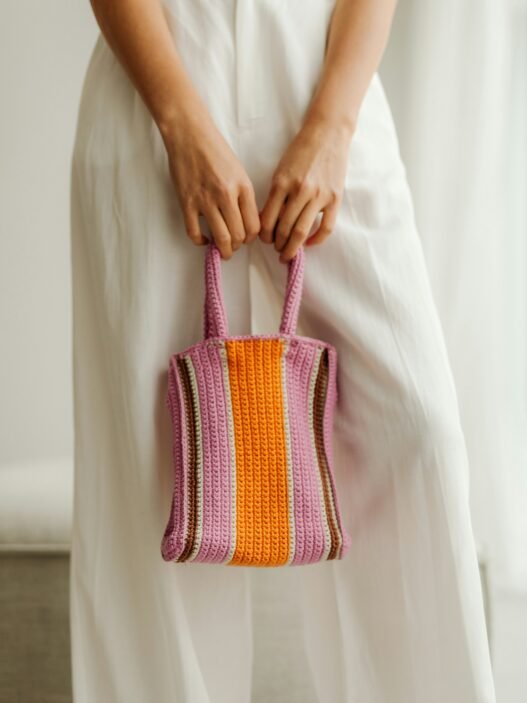
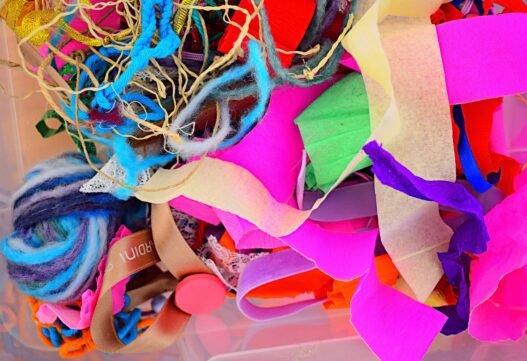
Another favourite was our yarn swap. Everyone brought skeins from their stash that never quite found the right project, and we spread everything out on the floor like a colourful treasure pile. A dozen of us sat around knitting and crocheting together, helping each other troubleshoot patterns or try new stitches. It was this perfect mix of craft, conversation, and low-stakes community building — the kind of night where you look up and realize you’ve made ten new friends without even trying.
Those events remind me why I love creative spaces. The skills matter, sure, but it’s the collective energy, the generosity, the shared problem-solving, the sense of “we’re all in this messy, magical thing together” — that really makes it feel like a studio.
Why We Need Studio Swaps
Every artist’s studio is a living archive of experiments, ambitions, and unfinished ideas. Over time, supplies accumulate. Ink that’s dried up, yarn that’s the wrong shade, fabric that doesn’t fit the project anymore. A Studio Swap reclaims that chaos and puts it back into circulation. Instead of hoarding, we redistribute. Instead of landfill, we create lineage.
For zine makers, this kind of exchange revives the spirit of the early underground press—collaboration over competition. It’s about sharing not just materials, but energy, advice, and stories. What begins as “take what you need, leave what you can” evolves into “let’s make something together.” And that’s an amazing feeling.
How It Works
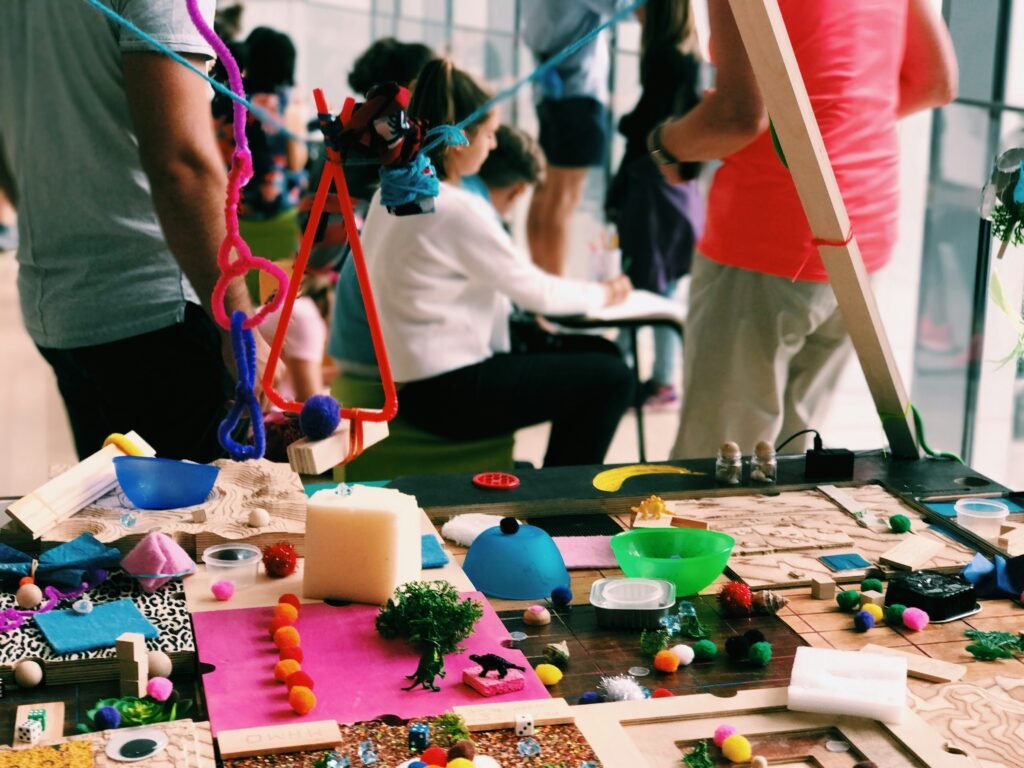
Hosting a Studio Swap is easier than it sounds. You don’t need an event planner or sponsor — just a space (your studio, a community centre, or someone’s garage) and a few tables. The floor and some pillows works too!
- Set the Tone: Frame it as a creative ritual, not a garage sale. Encourage people to bring items with stories: the brush that painted a heartbreak, the screen used for a protest poster, the stack of zines made during a breakup summer, etc.
- Create Zones: Organize tables or blankets by theme — “Paper & Prints,” “Textiles & Threads,” “Mystery Materials.” This keeps the chaos charming instead of overwhelming and helps your swappers know what to bring.
- Add an Energy Exchange: Alongside the physical swap, include an exchange of time or skills. “Trade me an hour of your editing help for an hour of my expertise as a knitter.” “Teach me how to bind a zine and I’ll give you a spool of metallic thread.”
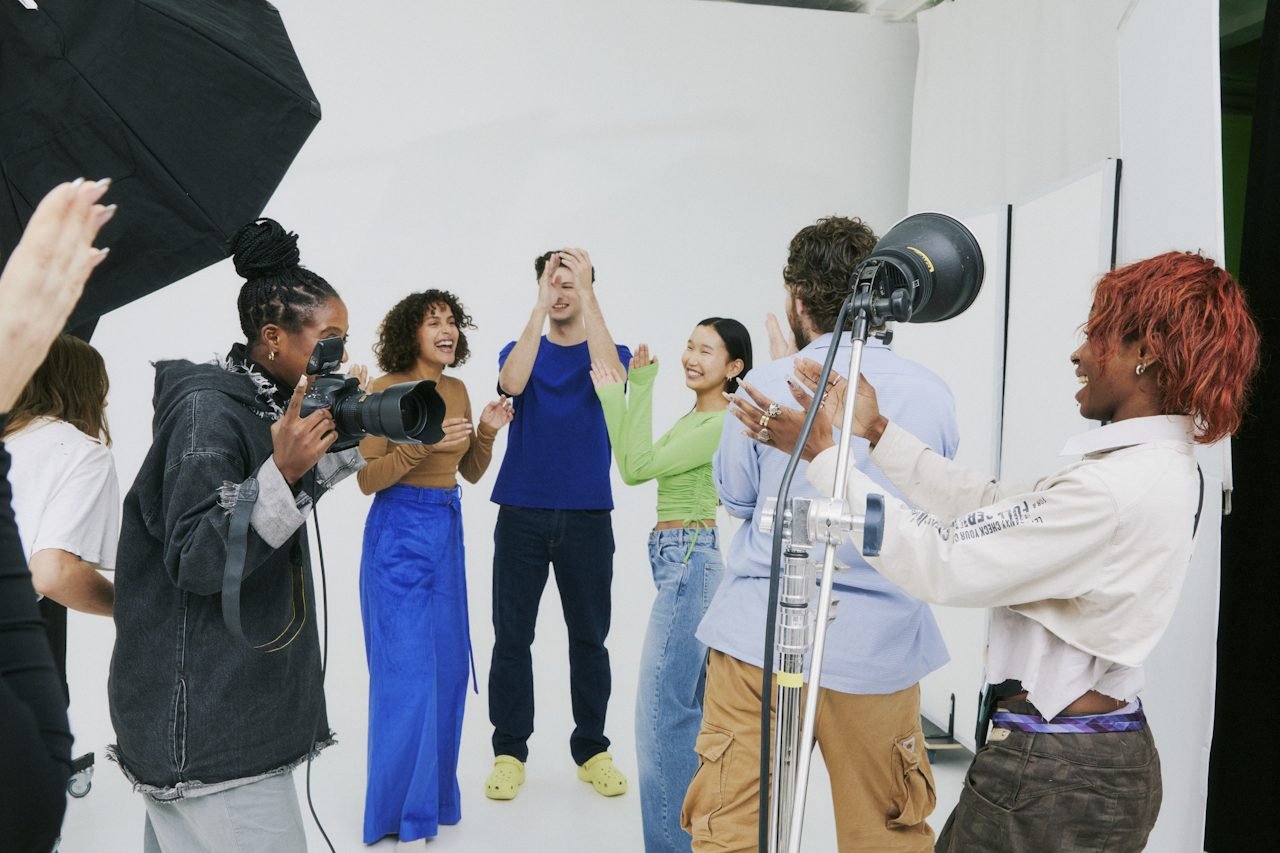
- Make it Ritual: Open with a moment of creative intention — something small and grounding. A group breath, a cheer, a “studio blessing” poem. Close with a group photo or collaborative piece that marks the event’s energy.
I like to do a tea toast, just acknowledge everyone’s energy to make it and a way to thank them for the gifts that they bring. This can be wine or beer, depending on what kind of night you want to have. Ha!
The Zine Table
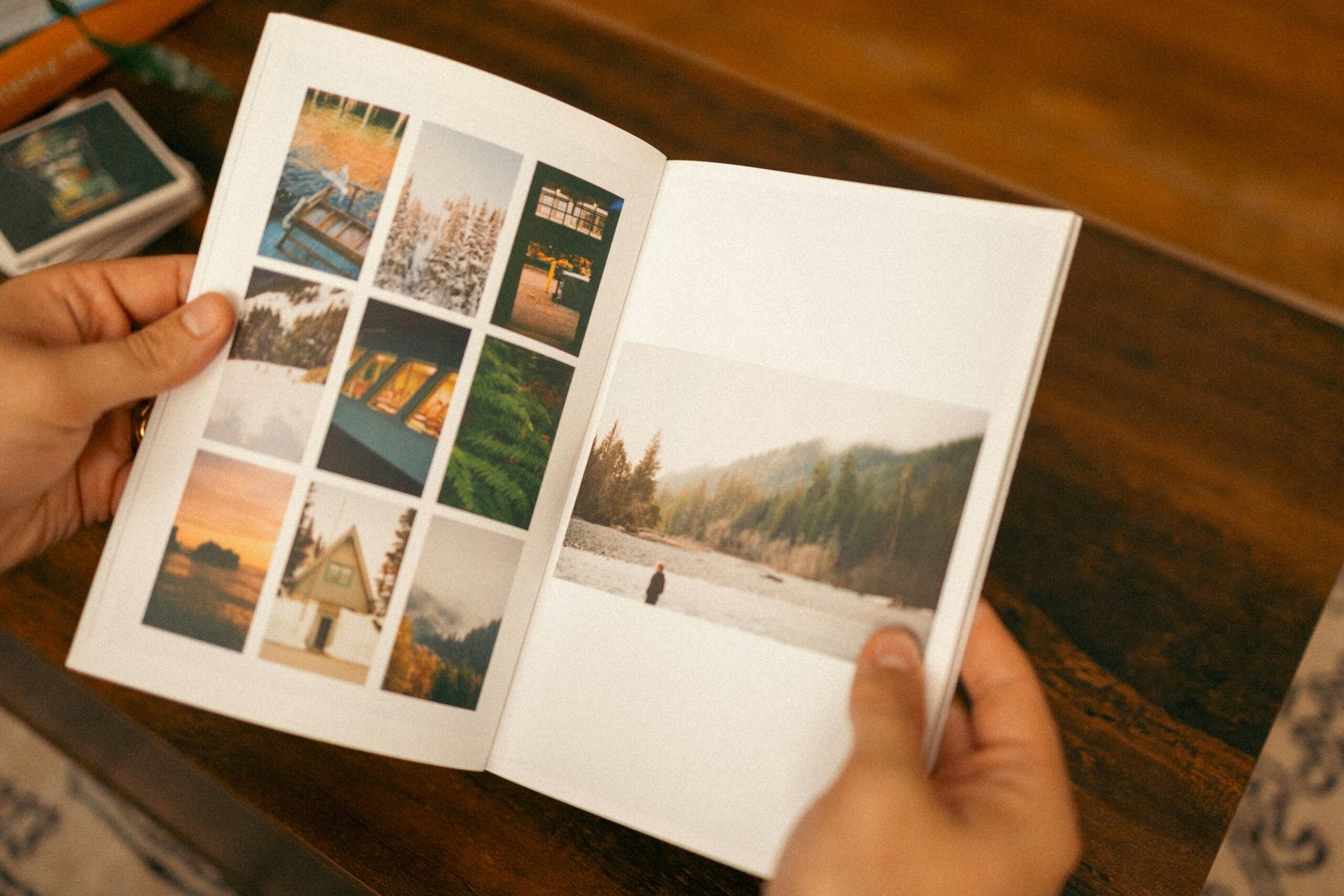
No Studio Swap is complete without a zine table or craft table. Encourage participants to bring their own zines, art prints, crocheted pieces, or something small sewn from scraps. It’s less about profit and more about propagation.
Set up a reading/skills nook nearby with old issues of Punk Planet, Bust, or Broken Pencil. Let people get personal instruction on a specific skill, talk about what zines meant to them, and maybe even start planning a collaborative project. Zines and craft are inherently communal objects; they thrive when they move through hands.
You could even include a “Zine Emergency Table” stocked with paper, glue sticks, and Sharpies so people can make micro-zines on the spot. The goal isn’t polish—it’s participation.
The Craftivism Angle
Studio Swaps aren’t just about craft; they’re about power redistribution. The feminist tradition of craftivism reminds us that every handmade object carries intention and resistance. When we trade materials, we’re trading labour, memory, and care.
Host a small talk or impromptu circle where attendees can share stories about their most political pieces—the protest banner that marched, the embroidery that healed, the zine that got them in trouble. These stories make the swap more than just an exchange; they make it a moment of creative solidarity.
Add a bulletin board for ongoing causes and collaborations: “Looking for other artists to yarn-bomb the park.” “Need help designing flyers for mutual aid bake sale.” “Starting a feminist makerspace—want in?”
Accessibility & Inclusion
Keep the event grounded in accessibility and anti-gatekeeping. Make sure there’s space for everyone—physically, emotionally, and economically.
- No one should have to “bring something good enough” to participate. Create a free table where beginners or those with fewer resources can still take part.
- Label materials clearly, especially if they have allergens (like wool or resin).
- If the space allows, include quiet corners for neurodivergent or sensory-sensitive participants.
- Make sure that your event space is fully accessible for all attendees, and this includes bathroom access.
Accessibility isn’t an afterthought—it’s part of the ethic of care that fuels DIY culture.
Documenting the Chaos
Bring a camera—or better yet, invite a few participants to take turns documenting the event. Capture the smiles, the mess, the art in progress. Post the photos as a community collage on your site, zine, or social media.
You might even turn the Studio Swap into an annual tradition or monthly event, creating a visual timeline of local creative evolution. Year one might feature mismatched yarn and Sharpies; year three might see collaborations born at the first event now exhibiting or publishing together.
Hosting Your Own
If you want to host your own Studio Swap, start small. Three friends and a living room are enough. Share photos, tag local makers, and invite community spaces to host next time.
You can also connect it to larger events — tie it into a feminist art show, a neighbourhood craft fair, or a She Zine Mag pop-up. Pair it with a mini skill-share session, live screen printing, or an “ask me anything” about zine-making. The key is low pressure, high connection.
Encourage everyone to leave with something that isn’t physical: an idea, a new collaborator, a spark.
The Bigger Picture
In an age obsessed with optimization, efficiency, and profit margins, the Studio Swap is gloriously inefficient. It thrives on slowness, storytelling, and serendipity. It reminds us that creativity isn’t a commodity—it’s a current.
Trading tools and zines isn’t just about redistribution of stuff; it’s about circulation of spirit. Every pair of hands that picks up your old brush or half-finished collage continues the lineage of making.
The Studio Swap becomes a microcosm of what art should always be: a living network of exchange, rebellion, and renewal.
Start your own Studio Swap this month. Gather your creative community, set a date, and spread the word. Post your event and photos using #NewGirlArmy and #StudioSwap, and tag @shezinemagazine so we can feature your collective in an upcoming issue and on our Events & Meetups page. We want to support your swap and crafting in your community!
Let’s turn clutter into connection and make the act of trading itself a creative revolution.
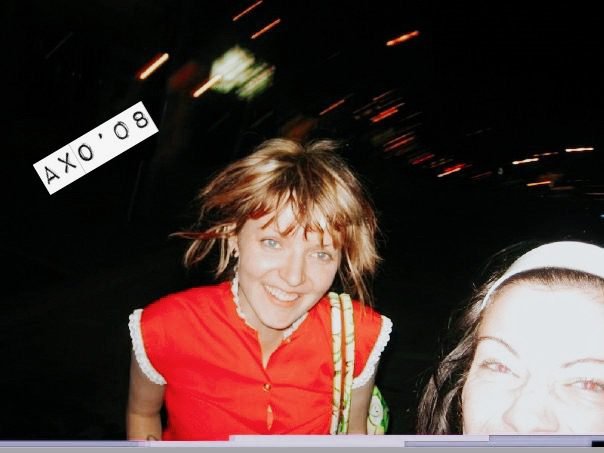
AXO (she/her) is a multidisciplinary creator, editor, and builder of feminist media ecosystems based in Toronto. She is the founder of She Zine Mag, Side Project Distro, BBLGM Club, and several other projects under the AXO&Co umbrella — each rooted in DIY culture, creative rebellion, and community care. Her work explores the intersection of craft, technology, and consciousness, with an emphasis on handmade ethics, neurodivergent creativity, and the politics of making. She is an advocate for accessible creativity and the power of small-scale cultural production to spark social change. Her practice merges punk, print, and digital media while refusing to separate the emotional from the practical. Above all, her work invites others to build creative lives that are thoughtful, defiant, and deeply handmade.