
















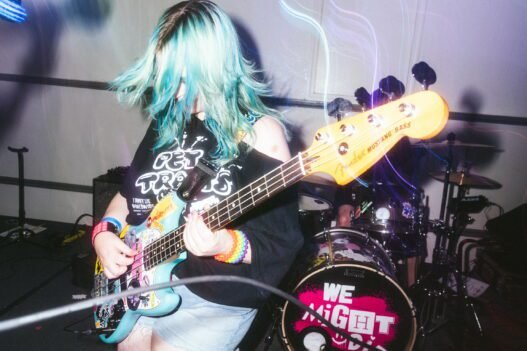
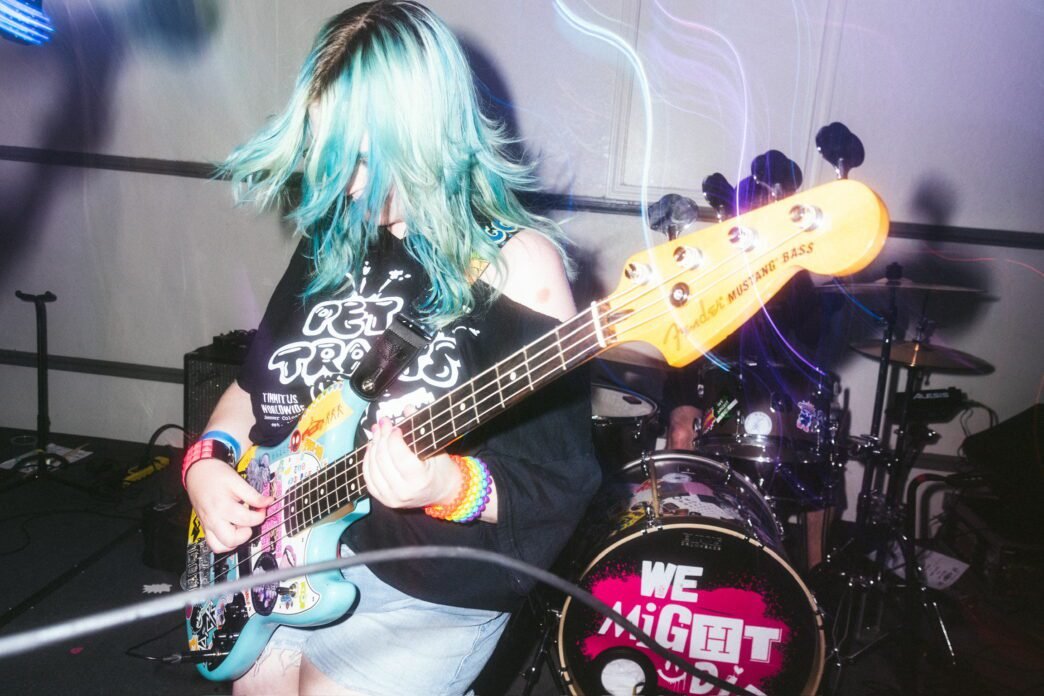
I had the pleasure of chatting with recent birthday girl, Liv, the teenage front woman of the punk band We Might Die. We were connected through Raph Copeland of knifetwister Records, who I interviewed for the She Zine here and he interviewed me here, and whose own conversation with Liv, and separately with the band, are also well worth checking out here and here.
Talking with Liv has a way of triggering reflection if you’re over forty — not the misty-eyed nostalgia kind, but the sharp, clarifying kind. The kind where you realize the confidence, clarity, and conviction she brings to her music would have absolutely floored you at that age. It still kind of does. She would’ve been cooler than me then. She still is.
Her writing is sharp and fearless, unafraid to name harm or call out silence, but never at the expense of humour, warmth, or human connection. She manages that rare balance: intensity without cruelty, care without softness-for-softness’s-sake.
Rooted in the Las Vegas punk scene, Liv shows up as someone willing to name betrayal, toxic dynamics, and the quiet ways power protects itself — especially in scenes that like to imagine they’re already “good.” At the same time, her work is deeply about community: about showing up, practicing accountability, and paying attention to the small, unglamorous gestures that actually build trust over time.
This is our conversation…
SZ: Can you introduce yourself and maybe give a little backstory about the band? Who do you play with? How did you all come together to form the band?
L: Hello! I’m Liv, and I’m the front person and bassist of Las Vegas punk band, We Might Die. We Might Die is based on all of our anxieties and personal experiences. All of us in the band have extreme anxiety disorders and are very neurotic. I play with Travis and Chance. Travis is a friend of my dad’s and Chance is my dad! Originally, we were all part of a band named Black Heart Emoji, but the three of us broke off to start our own project.
SZ: Your debut album Hate You blends punk, hardcore, and alternative elements — how do you think your sound has changed since you first started playing together?
L: I think our sound is definitely a lot more serious and harsh than when we originally started playing together. In the first band we were in, we were definitely playing a lot more pop-punk and softer music. Our lyrics have also gotten more honest and personal. Originally, I wasn’t the singer of the first band but when we formed We Might Die, we decided Travis and I would both sing, with me doing main vocals. One of the biggest issues we faced with the original singer was that she wasn’t writing lyrics that were about anything or that meant anything to her. We would ask her why she wrote a certain line or what the song was about and the answer would usually be “i dont know” or “it sounded nice and it rhymed.” Our sound has definitely gotten a lot louder and more personal.
SZ: You bring an angsty and blues-infused vocal style that’s described as both powerful and authentic — how do you balance singing about heavy stuff with staying true to yourself as a person?
L: I think it’s pretty easy because most of the stuff that I decide is important enough to write about is stuff that I feel strongly about. I do have to be mindful about what I write, though, because some stuff might be too personal to me or someone else to mention. I also only write about the moments or experiences that I had with that person. I don’t think it’s fair to incorporate lyrics about how they look or other parts of their personality, besides the ones that influence the experiences I had with them.
SZ: Your songs tackle betrayal, toxic relationships, and refusing to swallow other people’s anxiety and bullshit. How do you decide which real-life moments become lyrics and which ones stay personal — and has putting that honesty out there helped you connect more deeply with other women and girls who’ve lived through similar things?
L: When I think about what should stay personal and what should become a song or lyrics, I think about how comfortable I’d be with other people knowing about it. Most of our songs deal with heavy lyrics or materials, but I never mention the experiences that those emotions came from. A lot of our songs are based on deeply personal experiences, but I focus on how they made me feel instead of giving a play-by-play of what actually happened. It’s really helped me connect more deeply with other women and girls who’ve lived through similar feelings or experiences because I get so many people coming up to me after shows or when they see me and talking about how much they love Get Out of My Scene and Six Feet Deep. It’s helped me connect because we can all be angry about something together. I feel like our songs are pretty vague in what actually influenced them, but the emotions are obvious, so it’s easy to relate that to something personal to yourself or whoever is listening.
SZ: What’s the usual ratio of women to men at a We Might Die show, and does that shape how you think about who you’re speaking to onstage?
L: Obviously, I am in an inherently male-populated field. Our ratio is pretty impressive, though. It’s definitely a lot more women than you usually see at harder shows. I think it’s important that a lot of men are at our shows because just talking to women isn’t going to change anything. Of course, I can echo the same things women tell me and the same stuff we are told by everyone, but it only helps if men hear it. Women obviously are aware of the struggles because we live it every day, but men might not be as aware, and it might take someone actually saying something, which helps if that person has a microphone and is the center of attention, for them to fully grasp the gravity of it.
SZ: The band’s lineup is kind of unique — a very young woman (if you don’t mind me saying) fronting a hardcore band with seasoned musicians — how does that dynamic influence how songs get written or performed?
L: Travis is insanely talented, but we’ve actually been performing/learning for about the same amount of time. We both started about 5 or 6 years ago. My dad, Chance, is the most experienced out of all of us. He’s been playing in bands since he was about my age and music has basically been his life. The age aspect is definitely kind of interesting because most people assume I’m older since I’m playing with older people. It doesn’t really affect how songs get written because we all have similar creative processes and influences. Performing is definitely a bit different, though. I’ve found that I have a hard time performing or working with people closer to my age because I have trouble fully trusting them to learn their parts or perform them successfully. Although that probably says more about me than them. When I’m performing with Travis and my dad, I can fully trust both of them and know that if anything possibly goes wrong while performing, they’ll be able to handle it. My dad has also mentioned to both of us that he feels the same. He’s able to trust both of us, and I take a lot of pride in that.
SZ: You’ve played high-energy live shows and gotten attention online and in local reviews — what’s one moment onstage that made you feel like this band really matters?
L: I think the biggest moment like that for me was definitely our Birthday Bash, celebrating one year of being a band. It was an entirely free show, and we had a ton of fun stuff. Seeing the number of people that actually showed up was so emotional for me. Also, hearing all the wonderful things people said to us during that show specifically made me realize how much this band matters in the community and to everyone else. It was really powerful to see how many people genuinely care about us.
SZ: You wrote a really incredible and powerful song, Get Out of My Scene, about the sexual assault of a friend. What can you tell us about that and the impact it had on you without betraying any confidences or telling someone else’s story? When you wrote the song, what did you want the world to understand that wasn’t being heard?
L: When I wrote this song, it came out of pure rage. My friend had confided in me everything that had happened while she was in a relationship with him, and I couldn’t stand the thought of everyone thinking of him as this great guy when, in reality, he was the biggest fucking asshole I’ve ever met. Once I found out about her story, I started talking to some of my other friends, and it turned out that the majority of them had negative experiences with him. Additionally, he would also make a ton of extremely racist jokes and comments, all while wearing a battle jacket with patches such as Bad Religion and Dead Kennedys. I wanted everyone to understand that he wasn’t this “good samaritan punk” that he presented.
SZ: Calling out the guy by name when you perform the song is a powerful move — can you talk about what that moment means for you, not for him?
L: For me, that is a moment of saying, “I know what you did, and I know you’re not as good as you’d like everyone to think.” It’s definitely a powerful moment for me, especially because I used to be pretty good friends with this guy.
SZ: Do you see the song as justice, testimony, catharsis, or something else entirely?
L: I definitely see this song as justice and catharsis. I don’t think of it as testimony because the stories of the assault and such aren’t my story to tell. I just know what he did and the things he says. I see it as justice because, from what I know, he used to be pretty active in the local scene, so it’s nice to call him out in a place where I know he’s been and a place where people probably know of him. Faux-punks like that need to give up the act and get the fuck out of this scene.
SZ: Have audiences reacted the way you expected and what did that look like in your mind? Or has something surprised you?
L: I have a lot of imposter syndrome, so originally, I thought people wouldn’t appreciate our songs or think we weren’t “hard enough,” so it was definitely surprising when people reacted how they did when we first started playing. I used to be so shocked in the beginning when someone would call us a punk band because I didn’t think we were deserving of that title. Now, people definitely react the way we expected. It’s amazing how much music can connect everyone, especially when it’s a common emotion or experience.
SZ: Do you feel the scene understands how to support survivors, or does it still fall short?
L: I think the scene, unfortunately, still falls short. Of course, there are some great organizations and people doing amazing things for survivors and such, but there’s an overwhelming amount of people who definitely don’t help. The scene is very cliquey here, and it’s easy for drama to spread. People in the scene mainly stick with whatever their friends believe or what they heard from their friends. Naturally, if a survivor speaks out about something and one person says it’s not true or something like that, a ton of people will start to piggyback off of that. I personally always believe someone when they say they’re a victim until it’s proven false. Additionally, I only call people out onstage if it’s completely confirmed. Like multiple people can give an exact story, and/or the person who is being accused speaks out and admits to it.
SZ: How do you decompress after shows where the energy gets really intense?
L: Right when I get home and most of the day after a really intense show, I’ll spend most of my time in my room. I’m a pretty introverted person, so being around people really drains me. And of course, there’s the anxiety part of it all. Most of my time spent out in public is just trying to keep myself calm and not completely freak out. When I get home, I’ll eat and then immediately change into super comfy clothes and retire to my bed for the next day or so. I think my bed and my room are my favorite places. Usually, on the day after a show, I’ll play some video games on my computer or consume content about some of my special interests since I have a bit more energy but still want something to keep me from going completely neurotic.
SZ: How do you and your bandmates take care of each other offstage?
L: We take care of each other offstage in a lot of ways. Obviously, Chance is my dad, so he does the usual “dad” stuff. I think we all take care of each other very well because even if we’re not doing very well mentally, and it’s taking a toll on our motivation for the band, we’re able to communicate that to the other members and be open about it. Also, during practices and whenever we’re hanging out, we all get to talk about our personal lives, and I tell the guys about whatever school stuff I have going on. It feels very much like a family.
SZ: What responsibility (if any) do you think musicians have when they write about Trauma?
L: I think musicians do have a bit of responsibility when it comes to writing about trauma. This doesn’t mean that you HAVE to write about it, but I think it’s important that musicians write music that others can connect to. I think it’s very important to have songs or creative expressions of trauma because that can make it easier to connect with and more accessible to others. It’s a very different experience listening to a song about trauma rather than listening/watching a TED talk about the same topic. Music is a lot more accessible and interesting to a lot of people, and it presents it in a creative way, which I think makes it extremely easy to connect with. I also think it’s important to express hard emotions and experiences this way because it lets people know they’re not alone. I feel like being in a band and being a “rockstar” has a particular glamorous image associated with it, but in reality, it’s a lot of work, and we’re all still real people. I think it’s important to know that even the people you idolize have the same emotions and even the same experiences as you.
SZ: What do you wish older people in the scene understood about supporting young artists who tackle heavy material?
L: I wish other people would understand that I, and every other young musician, am still a kid. I feel like a lot of people I talk to see me as kind of like completely different from other kids sometimes because I talk about serious things. Just because other kids or people my age don’t have a platform, doesn’t mean that they aren’t mad about or speak up about the same things. And, I still go to school, I still am bored out of my mind in my math class. I’m the same as every other person; I just have a platform. I also think it’s important to still recognize that we’re kids. I think I especially work best when I’m not completely expected to behave like an adult. I still have pretty kid-like interests such as collecting Monster High dolls and plushies. I think it’s better if you embrace your age because that also provides a unique perspective for these heavy topics.
SZ: What does safety look like for you onstage, in the crowd, and online?
L: For me safety onstage is knowing that I can turn around and tell my dad if anything is going wrong or something because he’s always right behind me at the drum set. I can also tell Travis anything. Safety onstage is very much trusting my dad and Travis. Safety in the crowd is not having to worry about being assaulted or hurt. Of course, this is still a concern at any show, but it helps that I basically have like 20 parents in the scene and a lot of older people I am close with that I can go to if anything happens. Online safety isn’t really a concern that I think about that often because my mom manages all the social media accounts, and I don’t personally have any social media. I know we get a lot of weird comments and stupid assholes, but it helps that she doesn’t tell me about all of it.
SZ: What do you hope other women and girls see when you’re on stage?
L: I hope other women and girls see that you can do well in a mainly male-dominated field, and it doesn’t have to be like a spectacle. I feel like a lot of times when a female does something that’s usually male-dominated, it turns into like a “woahh look at her! It’s a girl doing this!” but I feel like our band isn’t so much like that. Like, yes, obviously, we are female-fronted, and a lot of people get really excited about it. But it doesn’t feel like that’s the main focus of our band.
SZ: Do you think scenes are built on big moments or tiny ones?
L: I think scenes are definitely built on smaller moments. I think they’re built on smaller moments because there have been many times at shows where someone gotten hurt and others have helped them up or just helped them in general. All of these small moments build connections that get strengthened at each show everyone attends. Obviously, big moments are very important and crucial to building the scene as a whole community but the tiny ones are what make specific connections between people.
SZ: How do you keep righteous anger from turning into burnout?
L: It is definitely a difficult balance. I think the best way from having it turn into burnout is writing when you really, like, need to get an idea out. If you’re just writing to write you could possibly hit a writer’s block or something like it when you’re doing that. Most of the songs I’ve written have come from spur of the moment ideas and anger. I think it’s best to let the ideas and inspiration come naturally instead of trying to force it.
SZ: What advice would you give to another band about staying human in all of this?
L: Some advice I would give is to stay true to yourself. Stay true to your beliefs, and own style even. I also don’t think you should try to put yourself in a box. Music and anything creative is best when it’s unique. If you and your bandmates listen to and are inspired by many different genres, don’t be afraid to mix them and show that in your music. I also think it’s important to realize your limits. There have been many times where we’ve turned down a show because one or more of us were overwhelmed because of the amount of shows we had played or were going to play. You need to remember that you’re still a human and your own mental health matters. Yes, the grind is important, especially in the beginning, but you shouldn’t negate your needs and you need to take some days to rest instead of just go, go, go.
So there you go! She’s cooler than you, too. Happy birthday Liv!
Official website:https://wemightdiemusic.com
Bandcamp:https://wemightdie.bandcamp.com/album/hate-you
YouTube: https://www.youtube.com/@WeMightDie-TheBand
Instagram: https://www.instagram.com/wemightdie.theband
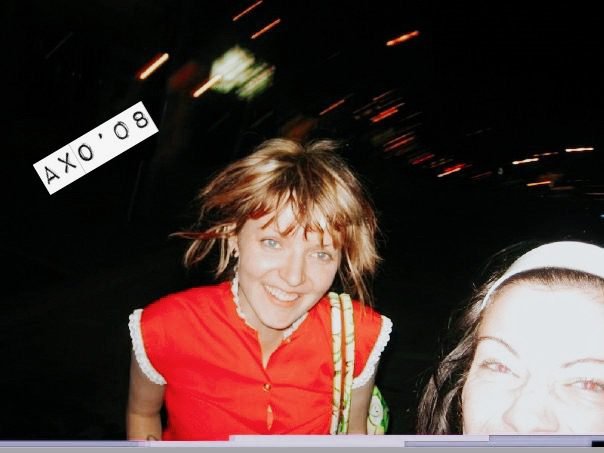
AXO (she/her) is a multidisciplinary creator, editor, and builder of feminist media ecosystems based in Toronto. She is the founder of She Zine Mag, Side Project Distro, BBLGM Club, and several other projects under the AXO&Co umbrella — each rooted in DIY culture, creative rebellion, and community care. Her work explores the intersection of craft, technology, and consciousness, with an emphasis on handmade ethics, neurodivergent creativity, and the politics of making. She is an advocate for accessible creativity and the power of small-scale cultural production to spark social change. Her practice merges punk, print, and digital media while refusing to separate the emotional from the practical. Above all, her work invites others to build creative lives that are thoughtful, defiant, and deeply handmade.




Amazing interview – well done, Liv and AXO. A pleasure to read