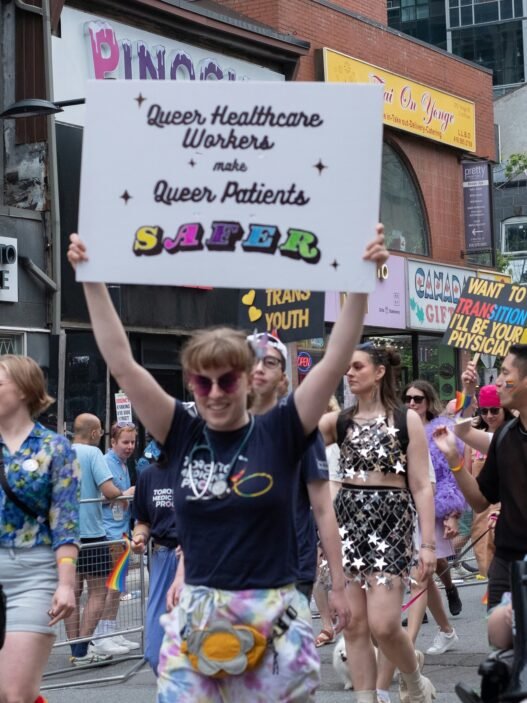











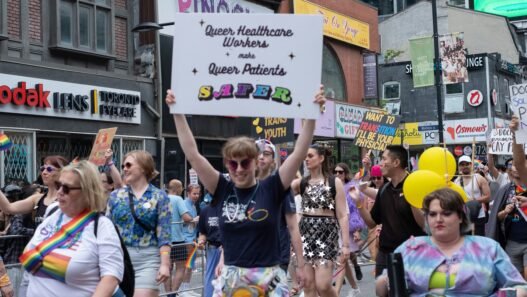



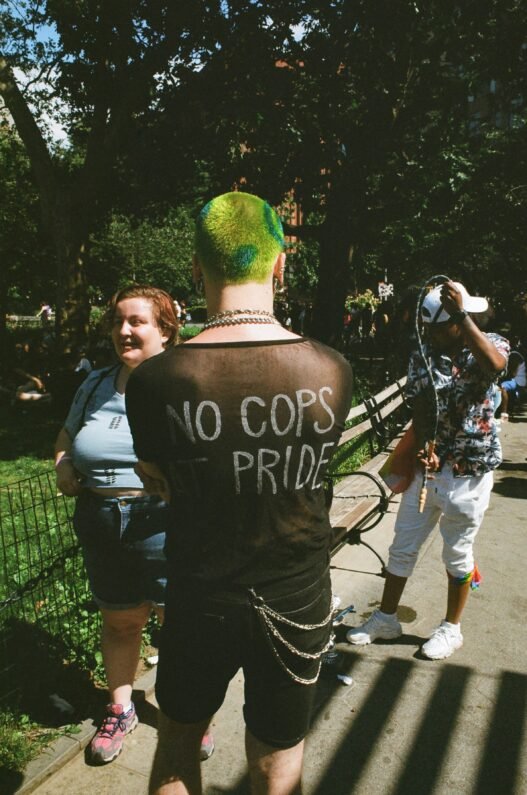
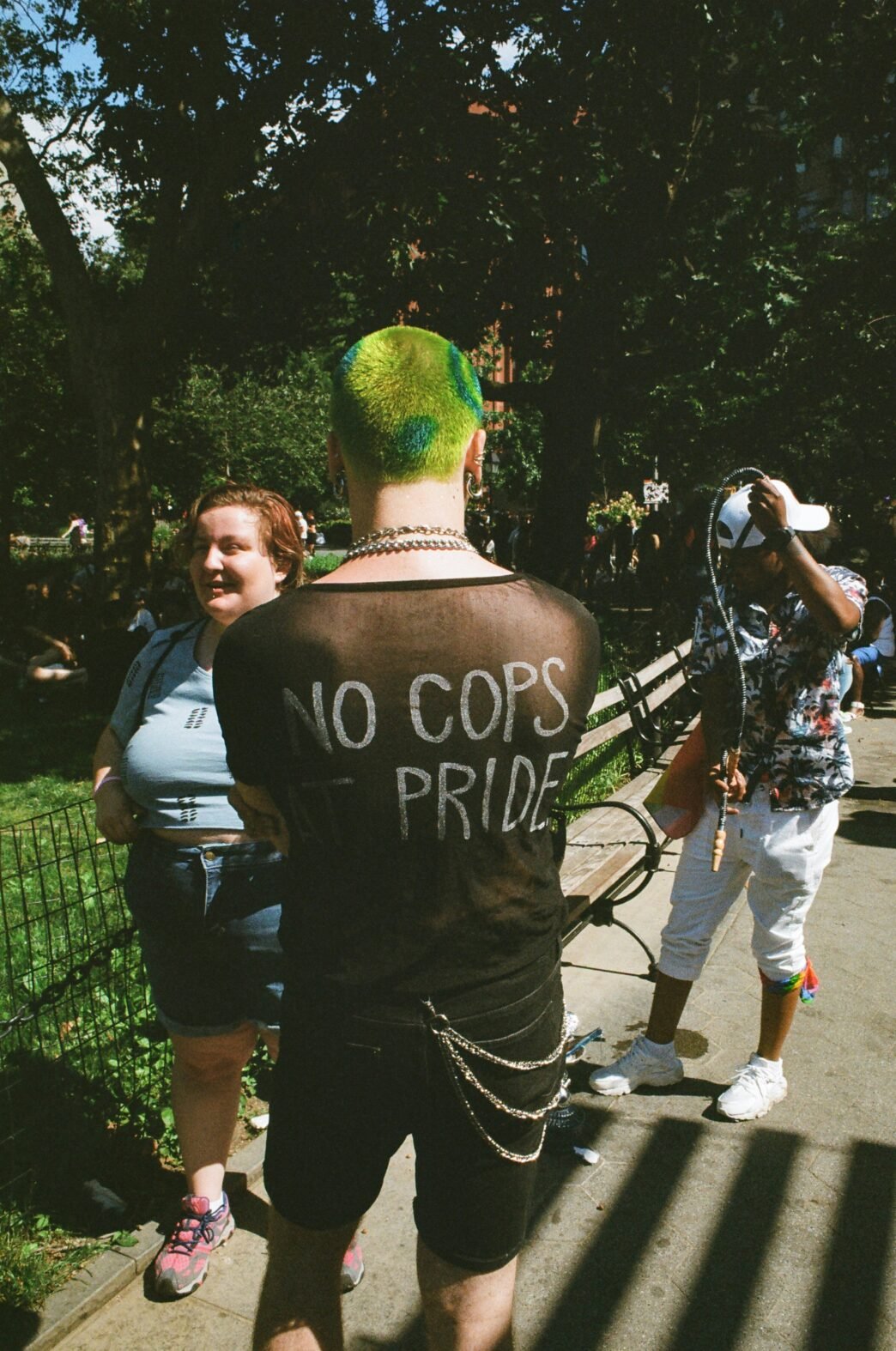
Pride began as a protest against police harassment, yet today many 2SLGBTQIA+ police officers and apparent allies within the police service want to march in the very events that grew out of that resistance. That tension has never been fully resolved and the history matters.
The modern Pride movement traces its roots to the 1969 Stonewall Riots, which began after a police raid on the Stonewall Inn in New York City. The riots were a response to decades of police harassment, raids, arrests, and surveillance directed at 2SLGBTQIA+ communities. Many activists argue that because Pride originated as resistance to police power, police participation fundamentally misunderstands the event’s history.
Canada has its own version of this story. In 1981, Toronto police carried out Operation Soap, raiding four gay bathhouses and arresting nearly 300 men. The raids triggered massive protests and are widely regarded as a turning point in Canadian 2SLGBTQIA+ activism. Many historians describe the protests that followed as a direct precursor to modern Pride celebrations in Toronto.
This history explains why many queer people—particularly older activists, trans people, racialized community members, sex workers, and those who have experienced police discrimination—feel uncomfortable seeing uniformed officers march in Pride parades. For them, the uniform is not a neutral symbol. It represents institutions that historically criminalized queer existence and, in their view, continue to disproportionately impact marginalized members of the community.
The debate exploded in Toronto in 2016 when activists from Black Lives Matter Toronto temporarily halted the Pride parade and issued a list of demands. One of the most controversial was a request that police officers not participate in Pride while wearing uniforms. Activists argued that Pride should prioritize the safety and inclusion of community members who had negative experiences with policing. The following year, Pride Toronto members voted to prohibit uniformed police participation, although officers remained welcome to attend out of uniform. The decision triggered national debate, city council discussions, and years of controversy.
Those who support restrictions on police participation often make a distinction between individual officers and policing as an institution. They are not necessarily arguing that queer police officers are not part of the community. Rather, they argue that a uniform represents state authority and an institution with a documented history of discrimination against LGBTQ+ people. Their position is that Pride should be a space centred on those most affected by that history rather than a venue for institutional representation.
Opponents of these bans argue that they are exclusionary and outdated. They point out that many police officers are themselves lesbian, gay, bisexual, transgender, or queer. Organizations representing 2SLGBTQIA+ officers have argued that excluding them while allowing other participants to openly represent their professions creates a double standard. They contend that the presence of openly queer officers demonstrates how much society has changed and that inclusion should extend to everyone within the community.
This argument has become particularly visible in New York City. Since 2021, organizers have prohibited uniformed police participation in the main Pride march, a policy that remains controversial. 2SLGBTQIA+ members of the New York Police Department have argued that they are simultaneously asked to provide security for Pride while being prevented from marching in uniform. Supporters of the ban respond that providing public safety and participating symbolically in the event are two different things.
The issue has also spread beyond North America. In the United Kingdom, recent court rulings have reignited debate over whether police participation in Pride compromises institutional neutrality. Critics argue that public institutions should avoid appearing to endorse political causes, while supporters maintain that participation helps build trust between police and 2SLGBTQIA+ communities.
One reason the debate remains so heated is that there is no single 2SLGBTQIA+ perspective on policing. The community is not politically uniform. A white, middle-class gay man who has generally positive experiences with police may view police participation very differently from a transgender woman who has experienced harassment or profiling. Similarly, younger 2SLGBTQIA+ people may approach the issue differently than those who lived through periods when homosexuality itself was criminalized. The conversation is often less about whether police officers are queer and more about whose experiences are centred in Pride spaces.
The debate has also become entangled with larger questions about what Pride is supposed to be. Is Pride a protest? Is it a festival? Is it a celebration of equality? Or is it a political demonstration? The answer is usually “all of the above,” but different people emphasize different parts. Those who view Pride primarily as a protest are often more likely to question police participation. Those who see it primarily as a celebration of inclusion may be more likely to support it.
Adding another layer of complexity is the fact that Pride itself has changed dramatically. Many modern Pride festivals receive government funding, corporate sponsorships, and support from major institutions. Critics argue that police participation is part of a broader process that has transformed Pride from a radical protest movement into a mainstream cultural event. Others argue that this transformation reflects decades of successful activism and should be celebrated rather than resisted.
The controversy has become even more visible at a time when Pride events face political pressure around the world. In some countries, governments have attempted to restrict or ban Pride events altogether. In 2025, Hungary introduced measures effectively banning Pride parades, leading to major protests and acts of resistance. In that context, debates about police participation can look very different than they do in Toronto, New York, or London.
What makes the issue so difficult is that both sides are drawing from real histories and real experiences. It is true that police forces have played a significant role in the oppression of 2SLGBTQIA+ communities. It is also true that many 2SLGBTQIA+ people now serve within those same institutions and see their presence as evidence of social progress.
The controversy surrounding cops at Pride persists because it touches on larger questions that remain unresolved. How should communities remember historical harm? What does accountability look like? Can institutions change? Who gets to decide what Pride represents? And how do movements preserve their radical history while also acknowledging social progress?
More than fifty years after Stonewall and more than forty years after the Toronto bathhouse raids, there is still no universal answer. The debate continues because Pride itself remains something more complicated than a parade. It is a living political movement, a cultural celebration, a historical commemoration, and a community gathering all at once. As long as those different purposes exist side by side, the question of police participation is likely to remain one of Pride’s most enduring and controversial conversations.
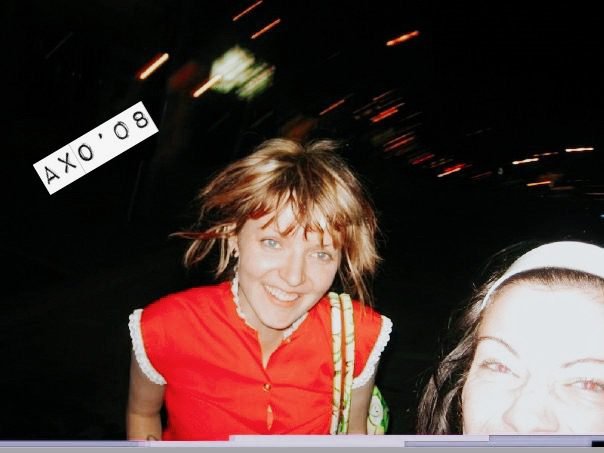
AXO (she/her) is a multidisciplinary creator and editor based in Toronto. She is the founder of She Zine Mag, Side Project Distro, BBLGM Club, and several other projects under the AXO&Co umbrella — each rooted in DIY culture, creative rebellion, and community care. Her work explores the intersection of craft, technology, and consciousness, with an emphasis on handmade ethics, neurodivergent creativity, and the politics of making. She is an advocate for accessible creativity and the power of small-scale cultural production to spark social change. Her practice merges punk, print, and digital media while refusing to separate the emotional from the practical. Above all, her work invites others to build creative lives that are thoughtful, defiant, and deeply handmade.