















If you’re looking to start an argument with that weird uncle your mom invited over for dinner, a good place to start is by bringing up what’s currently happening around gender, sexuality, identity, and 2SLGBTQIA+ communities.
Everyone seems to have an opinion, and it’s often a hill they’re ready to die on.
Some people believe schools should be safe spaces where all students can see themselves reflected in lessons, books, and classroom discussions. Others believe parents should have more control over what children are exposed to and when. Some people worry about student privacy. Others worry about student and teacher safety.
Politicians see opportunity. Activists see risk. School boards find themselves caught in the middle. Somewhere underneath all the noise are actual students trying to get through the school day.
Over the last few years, queer rights in education have become one of the most contested political issues in both Canada and the United States, and what makes the conversation particularly interesting is that the two countries often start with similar questions but increasingly arrive at different answers.
Although one could reasonably argue that Canada is heavily influenced by events south of the border, it is also difficult to ignore the extent to which American political and cultural battles increasingly spill into Canadian life. Whether Canadians want to participate in those debates or not, they often arrive at our doorstep anyway.
When it comes to the debate, it isn’t really about rainbows on bulletin boards or a single library book. It isn’t about one teacher, one policy, or one Pride flag hanging in a classroom. It’s actually about who gets to decide what schools are for in the first place.
If you look at the education system over the last twenty years, schools had increasingly been adopting anti-bullying policies. Gay-Straight Alliances appeared in high schools. 2SLGBTQIA+ representation became more common in curriculum discussions. Teachers received training on inclusion. Universities expanded support services and community spaces.
It wasn’t a perfectly smooth process, but the general trend was toward greater visibility and inclusion and creating safe spaces for all students and teachers in the classroom.
Then something changed.
Educational issues became a political issue and, as is true with so many issues, once something becomes a political issue, nuance is often the first casualty.
In Canada, education is governed by provinces rather than the federal government, which means that there isn’t one universal system coast to coast to coast. Instead, there are thirteen different approaches spread across provinces and territories that reflect the current political climate in that particular place and politics can vary widely across the country.
Until recently, debates had centred on curriculum.
What should students learn? At what age should topics related to sexual orientation or gender identity be introduced? What role should schools play in teaching about diversity?
The conversation now has shifted toward questions of parental rights and student privacy.
Several provinces have introduced policies that require parental involvement or notification in certain situations involving student names and pronouns. Supporters argue these policies strengthen the relationship between schools and families, however, critics argue they may be placing some vulnerable students at risk if they are not ready or able to discuss aspects of their identity at home.
Regardless of where someone stands on the issue, it has become one of the defining educational debates of the decade and what’s striking is how quickly the conversation has changed. The language has become bigger and the stakes feel higher.
The United States has become even more polarized. Depending on where you live in America, students may have dramatically different experiences. In some states, schools continue expanding inclusive curriculum, 2SLGBTQIA+ support services, and protections for students. In others, lawmakers have moved in the opposite direction and are banning books and making it easier to fire teachers based on their sexual orientation.
Florida’s Parental Rights in Education Act—often called the “Don’t Say Gay” law by critics—became one of the most visible examples of this shift, sparking national and international debates over classroom discussions of sexual orientation and gender identity.
As a result, two students living a few hundred kilometres apart may receive entirely different messages from their education systems. One may attend a school where 2SLGBTQIA+ history is incorporated into lessons and support groups are encouraged. Another may attend a school where those same topics are heavily restricted or politically contested. That kind of inconsistency is difficult to ignore.
What makes these debates particularly fascinating is that they are rarely only about 2SLGBTQIA+ issues. They’re often stand-ins for larger questions, like who should influence children? What role should public education play? How much authority should parents have? What responsibilities do schools have to protect students? How do we balance privacy and transparency? And how do we define inclusion?
The conversation expands beyond sexuality or gender and becomes a broader argument about society itself and what often gets lost in the ether is how different schools look today compared to thirty or forty years ago.
For people who grew up in the 1980s, 1990s, or even the early 2000s, 2SLGBTQIA+ representation in schools was minimal. Some students never encountered openly queer teachers, or 2SLGBTQIA+ families represented in books. Discussions about sexuality often assumed everyone was heterosexual. Transgender identities were rarely mentioned at all.
For queer students, that invisibility can be isolating and for non-queer students, it created the illusion that these communities didn’t exist. Schools reflected a very narrow version of society.
A significant number of today’s schools are trying to reflect a broader reality, which is welcomed by some people and deeply uncomfortable for others.
Visibility changes things. Once people become visible, they become harder to ignore. A queer student isn’t an abstract concept anymore. They’re a classmate,
a teammate, a friend, a sibling, or a child.
Visibility has always played a central role in social progress. The same thing happened with women’s rights, disability rights, and racial equality movements.
People become visible and society reacts.
Visibility becomes normal and eventually people wonder what all the fuss was about.
But while visibility is often celebrated by those who gain it, it can feel disruptive to people who preferred the old status quo, which is where much of the discomfort originates.
Not from Pride flags, books, or assemblies, but from change.
Schools are one of the first places where social change becomes visible.
They’re where new generations encounter ideas that may differ from their parents and those of previous generations. That has always been true.
It was true when girls gained greater access to education and when schools became more racially integrated. It was true when disability inclusion expanded. And it’s true today.
The challenge is that schools are being asked to do several jobs at once.
Parents want schools to educate children and communities want schools to reflect shared values. Governments want schools to prepare future citizens, while students want schools to feel safe and relevant.
When these goals don’t align perfectly, the result is inevitably conflict. Lots of conflict.
Perhaps the most famous university-related controversy in the recent memories of Canadians who are paying attention to the issue was the debate surrounding Jordan Peterson. He rose to prominence in 2016 after publicly opposing aspects of Canada’s Bill C-16 and arguing against what he viewed as compelled speech surrounding pronoun use. The controversy generated international attention and helped turn discussions about gender identity, free expression, and academic freedom into major political issues that aggravated people on both sides of the argument.
Since then, Jordan Peterson has become a prominent conservative podcaster and commentator, emerging as one of the most visible critics of the educational and cultural shifts surrounding gender identity, pronoun use, and 2SLGBTQIA+ inclusion that have transformed many Canadian institutions over the past decade.
Even so, disputes at Canadian universities have generally remained more focused on policy debates and public discourse than the province-wide legislative battles now taking place in many K–12 education systems.
Part of that may be because university students are adults. Part of it may be because universities have historically been spaces where diverse viewpoints and identities are expected. Either way, the fiercest fights continue to happen in K–12 education, and those fights show no signs of disappearing.
The unfortunate reality is that schools have become proxies for larger cultural anxieties. Housing, food insecurity, the economy. People are exhausted and trust in institutions is declining. When people feel uncertain about the future, cultural issues often become flashpoints. Suddenly discussions that should be practical become ideological.
Lost in all of this are the young people themselves.
Regardless of politics, most students want remarkably ordinary things. They want friends, acceptance, a way to feel safe, to learn, and to simply belong somewhere.
Those desires are not controversial. They’re human.
The challenge facing both Canada and the United States is figuring out how to build educational environments that respect families, support students, and reflect diverse communities without turning every classroom into a battlefield, which won’t be easy.
The debates surrounding queer rights in schools aren’t going away anytime soon, and if anything, they are becoming more central to broader conversations about culture, politics, identity, and the future of public education. But perhaps there is one thing worth remembering. Schools have always changed.
Every generation believes the next generation’s schools are radically different.
And in some ways they are. The question isn’t whether schools will change.
They always do. The question is what values we want those changes to reflect.
Despite the headlines, the court cases, and the endless social media arguments, it’s worth remembering that most young people are growing up in a world that is more diverse, more connected, and more accepting than the one many of their parents experienced. They are meeting classmates from different backgrounds, encountering different perspectives, and learning that there is more than one way to move through the world amongst themselves, regardless of what’s being taught in the classroom. That doesn’t mean every problem has been solved, but it does suggest that the future may be more open than some people fear.
Perhaps the most hopeful thing about these debates is that they exist at all. People rarely fight this hard over things that don’t matter and behind every argument about curriculum, pronouns, or school policy is a deeper conversation about belonging, dignity, and who gets to feel safe in public spaces. The answers won’t always be simple, and they won’t always satisfy everyone, but the fact that we continue to wrestle with these questions is a sign that people still care about building communities where more young people can see a place for themselves.
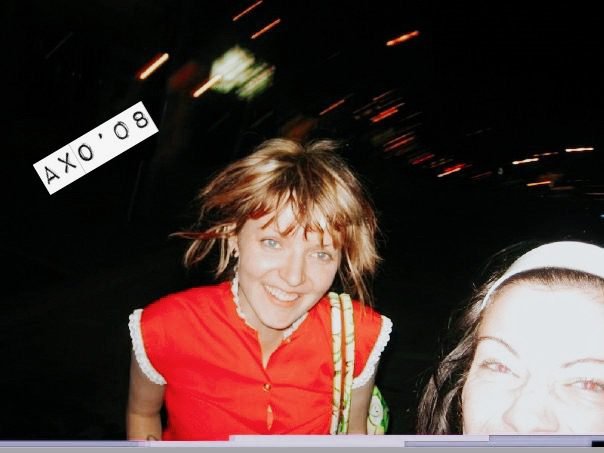
AXO (she/her) is a multidisciplinary creator and editor based in Toronto. She is the founder of She Zine Mag, Side Project Distro, BBLGM Club, and several other projects under the AXO&Co umbrella — each rooted in DIY culture, creative rebellion, and community care. Her work explores the intersection of craft, technology, and consciousness, with an emphasis on handmade ethics, neurodivergent creativity, and the politics of making. She is an advocate for accessible creativity and the power of small-scale cultural production to spark social change. Her practice merges punk, print, and digital media while refusing to separate the emotional from the practical. Above all, her work invites others to build creative lives that are thoughtful, defiant, and deeply handmade.