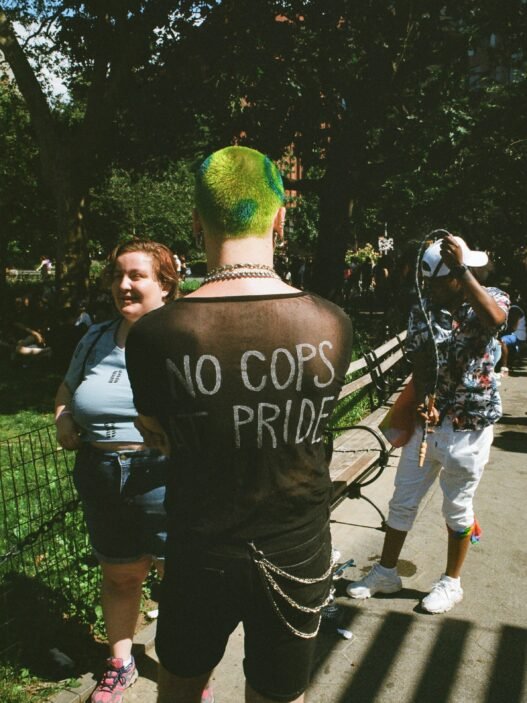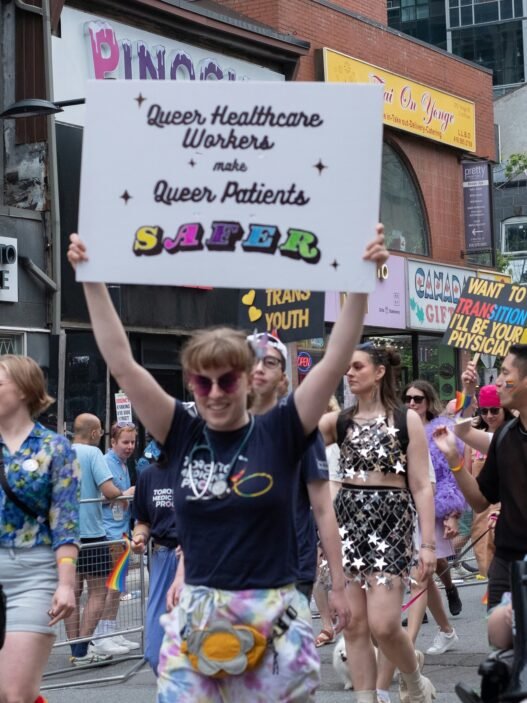
















Every June, corporations unfurl their rainbow flags, politicians suddenly discover the word “community” in the context of Pride, and somebody inevitably asks a queer person to explain the entire history of gender identity over drinks.
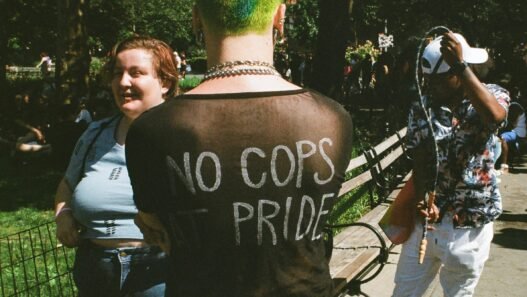
Pride Month has a funny way of making support feel performative. We start treating allyship like a public event instead of what it actually is: a relationship between people, and the truth is, most 2SLGBTQIA+ people don’t remember the companies that changed their profile pictures for thirty days or sponsored floats in the parade.
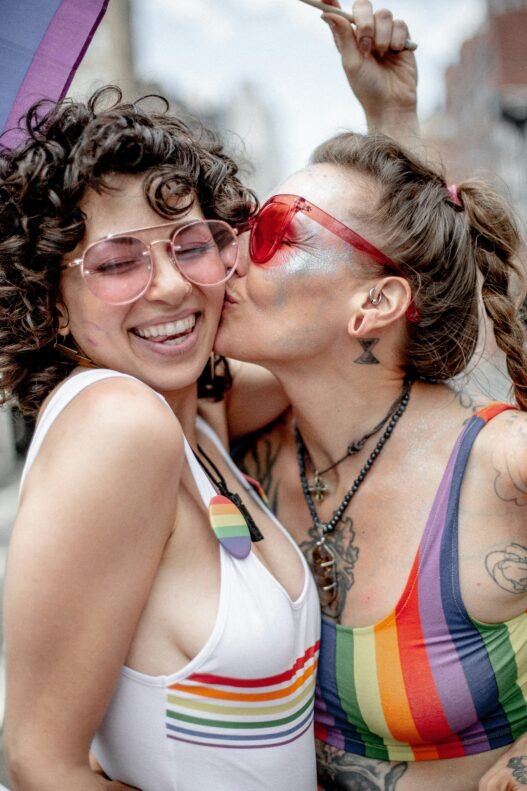
They remember the friend who checked in after a difficult family conversation or the coworker who quietly corrected someone using the wrong pronouns. They remember who made room for them at the table and who made them feel like they belonged there.
Support isn’t a badge you earn or a political identity. It’s not a special title or emoji you get to put in your Instagram bio. At its core, supporting 2SLGBTQIA+ friends is simply an extension of being a good friend.
It means listening when someone needs to talk and respecting people when they tell you who they are. It means recognizing that everybody deserves the freedom to move through the world without constantly defend or explain their own existence.
For many queer and trans people, friendship has always carried a little more weight within their communities than it does for others. Not because queer people are somehow different in their capacity for connection. It’s because history has often forced them to rely on one another. Long before Pride festivals became major city events, 2SLGBTQIA+ communities built support networks out of necessity. Friends became roommates, roommates became family, and chosen families emerged in places where biological families sometimes could not or would not provide support.
That history still matters today.
Even in a country like Canada, where legal protections have advanced significantly over the past few decades, coming out can still be complicated. A teenager might worry about how their families will react or whether their school will out them to their parents before they’re ready. A trans person might wonder whether a new workplace will be accepting and what might happen in a public facing environment. Someone in a small town may feel isolated, despite living in an era where information is available at a simple click of a button. Progress doesn’t eliminate vulnerability. It simply changes what it looks like.
One of the biggest misconceptions about supporting 2SLGBTQIA+ friends is the idea that you need to become an expert overnight. People get so worried about using the wrong terminology or making a mistake using pronouns that they end up overthinking every interaction. They become stiff and awkward and conversations inevitably become uncomfortable for everyone.
Most people aren’t looking for perfection. They’re looking for sincerity and for others to make an honest effort.
If a friend comes out to you, it isn’t necessary to deliver a prepared speech or start reciting statistics to prove how progressive you are. In many cases, the best response is surprisingly simple.
“Thank you for telling me.”
“I’m glad you felt comfortable sharing that with me.”
“How are you feeling about it?”
Those responses leave room for the other person to lead the conversation. They communicate respect without turning the moment into a performance and keep the focus where it belongs.
Sometimes that’s harder than it sounds because many of us have been trained to immediately, and perhaps subconsciously, relate everything back to ourselves. A friend tells us they’re gay and we start talking about our one gay cousin. A friend comes out as trans and suddenly we’re telling stories about a documentary we watched three years ago. We rush to demonstrate that we’re supportive rather than actually listening.
Listening is underrated.
It sounds passive, but it definitely isn’t. Listening requires attention and setting aside your assumptions by allowing someone else’s experience to exist, without immediately filtering it through your own. It means accepting that you may not fully understand what another person is going through and recognizing that this is okay. Friendship isn’t a test you pass by having all the answers.
Respect matters just as much.
For many 2SLGBTQIA+ people, names and pronouns are not minor details. They’re part of how a person understands themselves and moves through the world. Making an effort to use them correctly is one of the simplest ways to communicate care and respect. Nobody expects perfection overnight. People make mistakes and language takes practice. Especially if this is the first time you’re having to get accustomed to unfamiliar terminology. What matters is the sincere effort to get it right and the willingness to correct yourself without turning a brief slip into a dramatic scene.
There’s also a difference between curiosity and entitlement, and this is where many otherwise well-meaning people can get into trouble. Questions are not inherently bad and learning is important, but 2SLGBTQIA+ people are often expected to answer intensely personal questions that most straight or cisgender people would never be asked in the first place. Questions about relationships, bodies, medical decisions, sex lives, and family dynamics can quickly cross the line from genuine interest into absolute invasiveness.
A useful rule of thumb is simple: if you wouldn’t ask the question of a straight friend, think carefully before asking it of a queer one.
Support also extends beyond private conversations. In fact, some of the most meaningful moments happen when 2SLGBTQIA+ people aren’t even present. It’s easy to be supportive when a friend is standing beside you, but i’s harder when someone tells a joke at a family gathering or makes a dismissive comment in public Those are the moments that reveal what support actually looks like.
You don’t need to start an argument every time somebody says something ignorant. Sometimes a simple “That’s not cool” is enough. Sometimes changing the subject sends the message. Sometimes asking someone to explain why they think a joke is funny does the work for you. Small interventions matter because they shift the burden away from 2SLGBTQIA+ people having to defend themselves every single time.
The most meaningful support is rarely flashy and may not generate thousands of likes online. It’s built through consistency. It’s remembering that your friend’s partner should be invited to the party too or asking how they’re doing after a difficult news story. It’s showing up for a community fundraiser, celebrating milestones, relationships, creative projects, and everyday victories with the same enthusiasm you’d show anyone else you care about.
At the end of the day, 2SLGBTQIA+ people don’t need superheroes or perfect allies. They don’t need friends who have memorized every term in a glossary. What they need is what all of us need: people who listen, people who care, and people who make it clear that they are welcome exactly as they are.
That might not sound revolutionary. But for someone who has spent years wondering whether they’ll be accepted, it can mean everything.

AXO (she/her) is a multidisciplinary creator and editor based in Toronto. She is the founder of She Zine Mag, Side Project Distro, BBLGM Club, and several other projects under the AXO&Co umbrella — each rooted in DIY culture, creative rebellion, and community care. Her work explores the intersection of craft, technology, and consciousness, with an emphasis on handmade ethics, neurodivergent creativity, and the politics of making. She is an advocate for accessible creativity and the power of small-scale cultural production to spark social change. Her practice merges punk, print, and digital media while refusing to separate the emotional from the practical. Above all, her work invites others to build creative lives that are thoughtful, defiant, and deeply handmade.