

















There was a period in the late 1990s and early 2000s when it felt like every cool girl was carrying a copy of Bust magazine in her tote bag. I wasn’t particularly cool, but I certainly had my copy.
You’d find it tucked between vinyl at indie record stores, stacked beside copies of The Feminine Mystique at bookstores, or spread across coffee shop tables next to notebooks covered in band stickers. It launched as a zine and lived in the same cultural ecosystem as Riot Grrrl, DIY publishing, third-wave feminism, indie craft fairs, and the growing belief that women could create their own media instead of waiting for mainstream culture to represent them properly.
At the centre of much of that world was Debbie Stoller.
Born in Miami Beach and raised in a Jewish family, Stoller was an avid reader, music fan, and self-described outsider long before she became a cultural figure. She later attended New York University, where she studied political science and women’s studies. Those subjects would shape much of her future work, particularly her interest in how women were represented in media and who got to participate in cultural production.
Today, Stoller is often introduced as the author of Stitch ‘n Bitch, the bestselling knitting book (and its sequels) that helped launch a modern knitting revival. While that’s certainly true, reducing her influence to knitting misses the larger story.
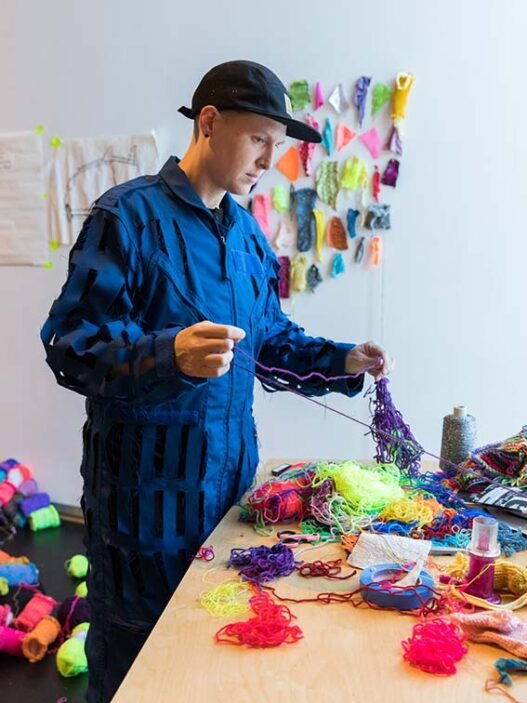
Debbie Stoller helped transform crafting from something many people associated with grandmothers into something that felt contemporary, political, creative, and culturally relevant by introducing readers to amazing crafters, artists, entrepreneurs, and makers who were making an impact during the DIY revolution that was happening at the time.
More importantly, she helped create a generation of makers who understood that producing culture was just as important as consuming it.
When Bust launched in 1993, the media landscape looked very different. Feminist publications certainly existed, but many younger readers struggled to find themselves reflected in either glossy women’s magazines or academic feminist journals.
Stoller co-founded the magazine alongside Laurie Henzel and Marcelle Karp. What began as a photocopied zine produced on a shoestring budget evolved into one of the most influential independent feminist publications of its era.
Bust arrived with a different energy.
The magazine covered reproductive rights and vintage fashion. Independent music and politics. Sex, art, books, activism, and DIY projects. All in the same publication. It treated readers like intelligent adults capable of caring about multiple things at once.
This sounds obvious now.
At the time, it wasn’t.
Third-wave feminism was still being defined. Riot Grrrl was forcing conversations about sexism in music. Young women were creating zines in bedrooms, photocopying manifestos at copy shops, and building independent cultural networks long before social media platforms existed.
Bust became a major part of that infrastructure.
The magazine featured musicians, artists, writers, filmmakers, activists, and creators who often received little attention from mainstream publications. It championed women who were making culture rather than simply appearing in it.
That distinction mattered.
A lot.
The publication helped normalize the idea that a feminist life could include making things with your hands and featured aspirational projects in every issue.
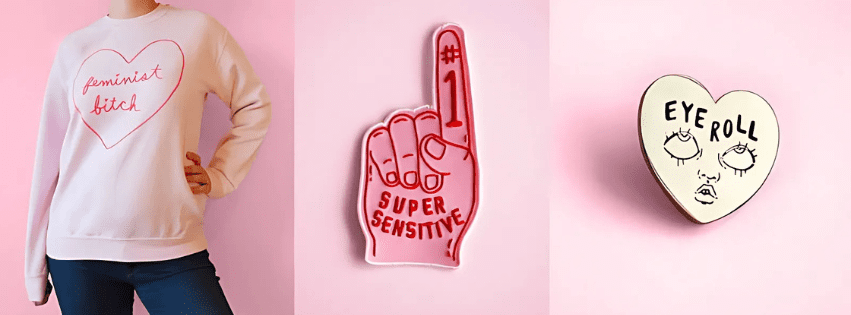
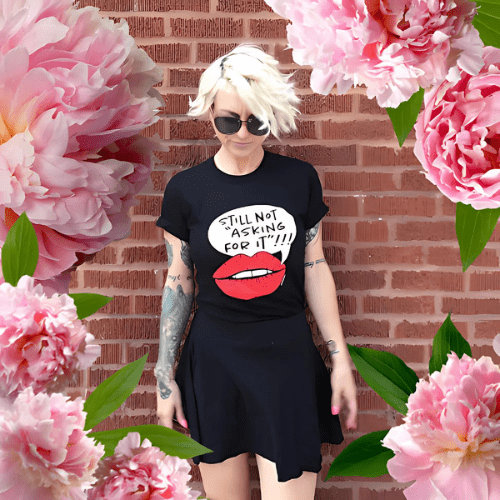
Bust also helped shape conversations around what would later become known as third-wave feminism. Unlike earlier feminist movements that were often portrayed through a more singular lens, Stoller and her peers embraced contradiction. They argued that women could be politically engaged while also caring about fashion, music, popular culture, craft, and personal style. The magazine rejected the idea that traditionally feminine interests somehow made women less serious.
This may sound strange today, but crafting wasn’t always viewed positively within feminist circles. For decades, activities associated with domestic labour were frequently dismissed as old-fashioned or politically suspect. Sewing, knitting, embroidery, and crochet were often treated as symbols of restrictive gender roles that should stay relegated to a home ec classroom rather than creative practices in their own right.
Stoller challenged that assumption.
Instead of rejecting traditional skills, she reclaimed them.
She argued that choosing to learn a skill is different from being forced into one.
That idea became central to much of the modern craft movement.
When Stitch ‘n Bitch arrived in 2003, knitting was not the cultural phenomenon it would later become. Independent yarn shops were far less common. Instagram didn’t exist. Ravelry hadn’t launched yet. The modern fibre arts boom was still years away.
What Stoller recognized before many others was that people weren’t simply looking for patterns.
They were looking for a creative identity.
The book arrived at exactly the right moment. Readers who grew up on punk music, zines, alternative culture, and DIY ethics suddenly found a craft book that spoke their language. Written in an approachable, conversational style that felt more like advice from a friend than instruction from an expert, the book removed much of the intimidation that had surrounded knitting for beginners.
Its influence can still be seen everywhere.
The rise of Stitch ‘n Bitch knitting groups helped create local creative communities long before Facebook groups became commonplace. Craft fairs such as the early Renegade Craft Fair gave independent makers places to sell their work. Publications like ReadyMade, Craft, Adbusters, Venus Zine, Bitch, and Bust all contributed to a broader cultural moment where making things became cool again.
The significance of that shift is often underestimated.
Today, we take maker culture for granted.
Independent ceramicists sell work online.
Fibre artists build successful careers.
Zine makers run publishing projects.
Small-batch creators sell directly to audiences.
Craft fairs fill convention centres.
None of this emerged from nowhere.
The modern handmade movement was built by thousands of people, but Debbie Stoller helped provide one of its most recognizable public faces.
The influence of Stoller’s work can also be seen in the current generation of feminist makers and publishers. Contemporary craft businesses, independent magazines, fibre festivals, maker markets, zine fairs, and creative communities often embrace ideas that Bust helped popularize decades earlier.
The notion that a ceramicist can be politically engaged. That a knitter can also be an activist. That a zine maker can become a publisher. That running a small creative business can be a meaningful cultural contribution rather than simply a commercial endeavour.
These ideas feel commonplace now, but they didn’t always.
Part of Stoller’s contribution was helping normalize them.
Her influence extends beyond knitting itself. Throughout her career, Stoller has acted as a cultural translator between worlds that are often treated as separate. She challenged divisions between art and craft, politics and pleasure, intellectual pursuits and hands-on creativity. Years before the term “maker movement” entered popular vocabulary, she was already advocating for the value of practical skills, creative self-sufficiency, and community-based learning.
Her work also anticipated many conversations that feel especially relevant now.
Long before discussions about slow living, anti-consumerism, sustainability, and digital burnout became common, Stoller was advocating for the simple act of making things yourself.
Not because it was productive.
Not because it could become a business.
Because creating something tangible changes your relationship with the world.
There’s a reason Bust continues to attract new readers more than thirty years after its founding.
The magazine still occupies a space that relatively few publications do. It remains interested in feminism, certainly, but also in creativity, independent culture, entrepreneurship, music, politics, craft, books, fashion, and the complicated reality of modern life. It continues to cover emerging artists, makers, writers, activists, and small businesses while maintaining the DIY ethos that helped define it in the first place.
In many ways, the questions Bust was asking in the 1990s remain relevant today. How do women create their own opportunities? How do independent artists survive? How do we build community outside corporate platforms? What does creative autonomy look like in practice?
The magazine isn’t simply documenting those conversations.
It’s still participating in them.
The magazine wasn’t simply offering content.
It was offering permission.
Permission to start a zine.
Permission to learn a skill.
Permission to care about politics and pop culture simultaneously.
Permission to take creative work seriously.
Permission to build your own version of culture rather than waiting for someone else to hand it to you.
For many readers, that permission became a career.
You can trace lines from Bust to independent publishers, craft businesses, artists, makerspaces, feminist bookstores, podcast networks, online magazines, and countless creative projects that emerged over the past three decades.
That’s what continues to make Debbie Stoller’s work relevant.
Not because she helped make knitting popular.
Not because she co-founded an influential magazine.
But because she consistently argued that ordinary people should have the tools to create culture for themselves.
Whether that means publishing a zine, starting a craft business, organizing a community event, learning to knit, launching a magazine, or building an entirely new creative practice, the underlying message remains remarkably consistent.
Participation matters.
Making things matters.
Creating culture matters.
More than thirty years after Bust first appeared, Debbie Stoller remains one of the most important figures in modern DIY culture—not because she built a movement on her own, but because she helped connect thousands of people who were already searching for one another.
The craft revival continues. Independent publishing continues. Feminist maker culture continues. New generations are still discovering knitting, zines, sewing, embroidery, ceramics, printmaking, and self-publishing every day.
And whether they realize it or not, many of them are working within a creative ecosystem that Debbie Stoller helped build—and that Bust continues to nurture.
That feels less like a legacy and more like an ongoing conversation. Which is probably exactly how Stoller would prefer it.

AXO (she/her) is a multidisciplinary creator and editor based in Toronto. She is the founder of She Zine Mag, Side Project Distro, BBLGM Club, and several other projects under the AXO&Co umbrella — each rooted in DIY culture, creative rebellion, and community care. Her work explores the intersection of craft, technology, and consciousness, with an emphasis on handmade ethics, neurodivergent creativity, and the politics of making. She is an advocate for accessible creativity and the power of small-scale cultural production to spark social change. Her practice merges punk, print, and digital media while refusing to separate the emotional from the practical. Above all, her work invites others to build creative lives that are thoughtful, defiant, and deeply handmade.