











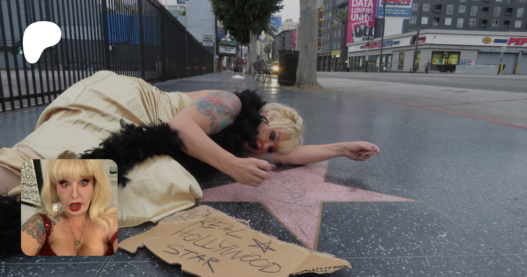
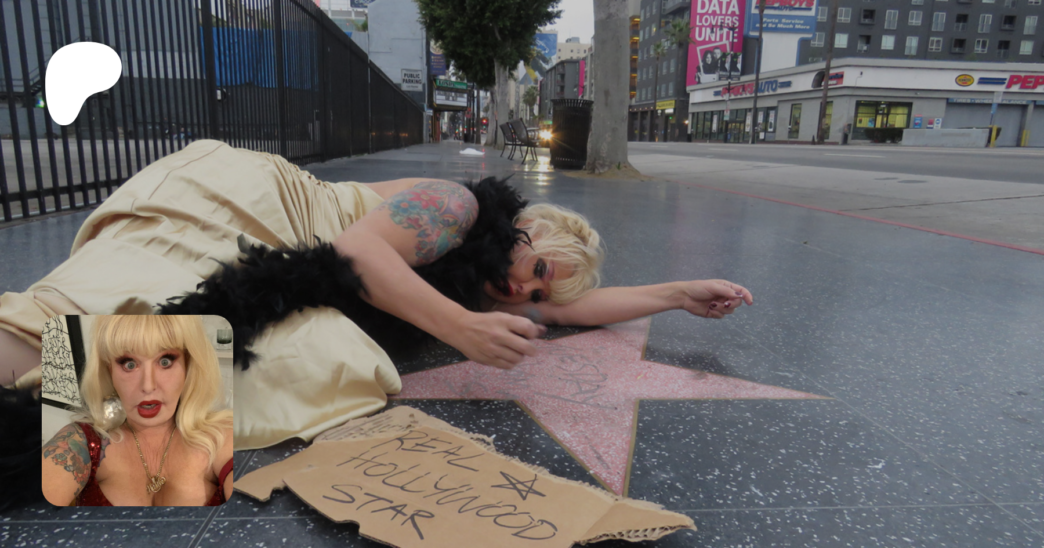
There are comedians who spend their careers carefully constructing a persona, and then there’s Tuesday Thomas, a woman whose very existence seems to defy the idea that anyone should have to be just one thing. Known as the Punk Rock Dolly Parton, she’s a comedian, performer, filmmaker, professional outsider, and self-described freak magnet with a razor-sharp tongue, a larger-than-life personality, and absolutely no interest in making herself smaller for anyone else’s comfort.
Tuesday has spent years turning the strange, uncomfortable, heartbreaking, and downright absurd parts of being human into comedy. From underground variety shows and legendary comedy clubs to documentary filmmaking and wildly inventive solo performances, her work is unapologetically personal, frequently outrageous, and rooted in the belief that laughter can be both an act of survival and a way of connecting with people who might otherwise have very little in common.
As an out trans woman, Tuesday knows what it means to have other people attempt to define your story. But she’s far more interested in telling it herself, preferably with a punchline that catches everyone off guard. Her comedy isn’t about asking permission, winning approval, or presenting a neatly packaged version of resilience. It’s about finding the funny in the mess, embracing the ridiculous, and refusing to surrender your sense of humour, even when life gives you every reason to.
With a career spanning stand-up, film, television, and her own gloriously unconventional productions, Tuesday has built a creative world that is entirely her own. And while her humour can be gloriously unhinged, there’s something deeply generous beneath it all: a genuine desire to make people laugh, feel seen, and leave the room a little lighter than when they arrived.
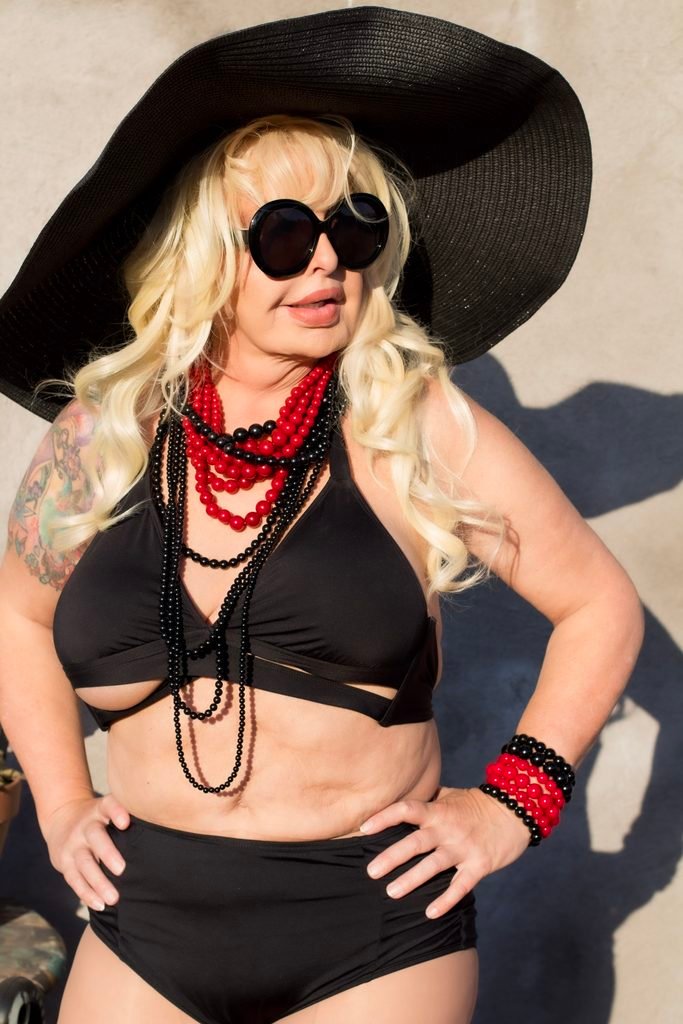
We caught up with Tuesday to talk about comedy as survival, the art of being an outsider, finding freedom in not giving a damn, and why kindness matters more than being nice.
SZ: For readers who are discovering your work for the first time, how would you introduce yourself?
TT: There is trans hate which we are all fighting.
There is trans joy, to which everyone wants to get
I am trans derangement. The person who has always fought, but uses her humor and actions in such an unhinged way you want to put traffic cones around me so people slow down and purposely rubber neck.
SZ: People know you as “The Punk Rock Dolly Parton,” which is one of the greatest nicknames I’ve ever heard. Where did it come from, and how much of that description actually feels like you?
TT: I think it’s fairly accurate.A friend donned that moniker on me. I am blonde, larger than life, hilarious, and can put anyone in their place if necessary with just a few words and with a razor tongue and bright wide smile.
SZ: You’ve described yourself as a lifelong outsider. Looking back now, do you think that sense of being on the outside shaped your comedy, or did comedy help you make sense of being an outsider?
TT: Very good question. I do think two things can be true at once. So my answer is yes.
SZ: Your mother apparently coined the phrase “Freak Magnet.” Was she exaggerating, or do strange people really have a way of finding you?
TT: I have so, so many stories. I was walking my dog and a couple blocks ahead was a gentleman who had an odd gate to his walk, a combo of skip, jump, walk dressed either hipster or updated pimp or clean houseless person with fashion taste. I witnessed him walk past several people not bothering anyone so I did not take too much notice. As he got to me he. Stopped. Dead. Turned, looked me right in the eye and said “thank you of coming tonight, but before you leave, our studio audience would like to know if there is any last words for them” in a very cheery manner.
I simply spoke into the hand he was pretending to hold a mic and said no, you have all been lovely, this has been a lovely experience and I wish you all the best.
To which he replied (as he turned his head around)
“You heard it here first ladies and gentleman, let’s give her a round of applause!” Turned back and said, thank you. Then walked away. Mind you no mic no phone came no go pro just him and a wonderful studio audience in his mind.
SZ: Your bio mentions that long before there was language to describe your experience, humour became a way to survive. Looking back now, when did you realize it had also become something you wanted to build a career around?
TT: I did not realize that. All I knew was if I could make aggressors laugh there was a much better chance of survival and chances went up when I made fun of myself and the things they just accused me of.
I’ve always used it in life but as for career I tried many diff things and it helped some and others not so much.
SZ: Your act draws from transition, relationships, divorce, anxiety, PTSD, and everyday life. How do you decide which experiences belong on stage and which remain personal?
TT: Nothing is personal. It may not be shared immediately as I need time to process and find the funny (tragedy+time= humor) but once I realized IDC what others think of me my humor valve book off and flowing freely I could just be me. Warts and all.
I always say idc what you think of me unless your name is signed on my paycheck or your Penis is inside me and then, not so much …
SZ: You’ve spoken about turning difficult experiences into comedy. Is there a point where enough time has passed that something becomes funny, or is it more complicated than that?
TT: I don’t know if there is a tried or true rule on how much time is needed. I think I can do it fairly quickly, and quicker than most as I have been doing it since a child. I do, however, know that if you do not rid yourself of the terror tragedy brings in a certain amount of time, it will sit with you and change your life in a bad way, from long term depression to actual physical illness and cancers. I had stuffed down a lot of things and I got to a point they all came up at once and manifested critical illnesses in me that I still have effects from today. I am not saying shove it away, forget about it. No I am saying sit with it, but don’t let it be you. In order for it to pass you must feel it, but you can not hold it.
SZ: Many comedians say they’re looking for the truth in a joke rather than simply the laugh. Does that resonate with you, and has your definition of what’s funny changed over the years?
TT: I think audiences can sense disingenuous immediately. If there is no truth you may get surface laughs but no staying power. I’d rather get staying power and help people see my truths that I make fun of, well they can make their issues lighter.
SZ: You’ve studied with The Groundlings, Second City, IO, and UCB—four institutions that have shaped generations of comedians. What did those experiences teach you, and what ultimately couldn’t be taught?
TT: You can not teach funny. You truly can not, you can teach how to, the different releases of self to facilitate funny, joke structure, etc but if you aren’t funny you just aren’t. And to that I mean your friends find you funny is one thing but to “real” funny is another.
SZ: Every comedian has at least one gig they’ll never forget—for all the wrong reasons. Do you have one that still makes you laugh now?
TT: I was up in Santa Rosa, CA. There was a mix of improv and stand up (which is the worst thing you can do imo). Stand up was going okay and the energy was picking up, then they put a new improv duo up who just sucked the life out of the room. I mean stares, glares and arms crossed. Next comedian (who was right before me) instead of trying to bring the room back just went to his material. They weren’t having it. He never acknowledged the disaster, their mood, etc. Just thought his male jokes were so great that it would save the day.
Well, it didn’t. Lol. I had to go up next. He started blaming them. Saying they wouldn’t know funny if it slapped them in the face, etc. just vilifying the people who paid to come in cause of course it couldn’t be him.
They booed him off. I had to go up. I tried to make comments on the situation, tried to cajole them saying well that’s over, etc. they were so mad nothing was working. I looked at a lady in the audience with her arms crossed glaring and said ”nothing I can say or do would make you or any of these people happy will it?”
She loudly said NOPE NOTHING.
I replied okay then. As long as I know where I stand I will just do my time, my material and hope I live to see another day (she smirked a little). By the end most arms were uncrossed, people went from glaring to staring, a few small laughs and as I left stage I looked at the woman and she said “YOU WILL LIVE TO SEE ANOTHER DAY BUT I’M NOT SURE OF THE REST SO I’D LEAVE IF I WAS YOU.”
So I did.
SZ: You’ve worked across stand-up, film, documentaries, and live variety shows. Does each medium allow you to reveal a different part of yourself, or do you approach all of them from the same creative place?
TT: Yes. Every art form uncovers a new layer.
By being my true self, no apologies. Honesty. Doing characters I know them in and out I know how they would respond in any situation. I know how to pivot if something isn’t working I will try a new thing. I’m not afraid.
SZ: Your career has included everything from underground comedy shows to established clubs and festivals. How has your relationship with audiences evolved over time?
TT: I’ve been fortunate. With a varied background like I have I can reach people of all kinds. I learned early on the majority of club goers are on a date. We all know what a guy wants after a date ( lol Hashtag not all men I guess),So if the girl doesn’t laugh he won’t even if he finds me funny. And when a 5’9” blonde 38dd woman enters the stage she may feel competition so I want her to feel at ease first. Then she hears means sees I’m “deranged” and laughs, bf laughs all good.
I started early going into other areas of town to do comedy. I went to all black clubs and was welcomed because I’m an idiot and would walk out on stage and being as opalescent as I am I would look at the audience staring at me and id say “what’s wrong, you look like you just saw a ghost. I went to a place way out in the sticks and made people laugh. Going out of my comfort zone made me a better comedian and made me able to relate to all types of people.
SZ: You’ve performed through enormous personal change. Has your relationship with the stage changed as you’ve become more comfortable with yourself?
TT: In a way. I think I’m at a point where I am creating more solo shows. Just did one, Confessions of a Groupie or I F’ed Jim Morrison the Night he Died but I Didn’t Kill Him So Stop Asking Me Questions! (yes that’s the whole name). Did another a year or so ago call Cabaret Kuhnt- A Trans American Fever Dream. Working on one atm about a 1970s trans activist, Angela Douglas, who believed in aliens and said that they had visited her and explained transsexualism to her. I am also filming a series called Factory Floor. It’s like if you took updated Warhol superstars and mixed it with Reno 9-11. Coming soon!
As I get up more and do more I am def more comfortable with stage and 100 percent more comfortable with me.
SZ: The documentary The Trash Goes Out on Tuesday invites audiences into your life in a different way than stand-up does. What was it like to become the subject of someone else’s storytelling?
TT: It really wasn’t someone else’s, it was me telling the story. My co-director was a friend who pushed me when I needed it but let me tell it in my way and make the story it is. We rode together. I wanted it to not be just a niche trans story. I wanted all types of humans to be able to take away things and find joy and be helped by it. It’s a story of survival , survival that host happens to be a trans woman.
SZ: You’ve performed everywhere from underground shows to legendary comedy clubs. Have you noticed that different cities laugh at different things?
TT: Not sure if they laugh at different things or if it’s the way you present. Language is the key. You can tell the same joke but might have to use different words, cadence, etc. people are all the same, how they communicate is different.
SZ: You’ve been performing for years, but every artist continues to evolve. How do you feel your voice has changed since you first started?
TT: No one compares me to other comics. People tell me I’m one and only. Thats a great thing. I think my evolution was to get stronger, some are to be better. In me getting stronger it of course made me better but the opposite is not always true
SZ: There’s a generosity in your work—it doesn’t feel like you’re laughing at people so much as inviting them to laugh with you. Is that something you’re conscious of when you’re writing?
TT: 100% absolutely and thank you for noticing. I do not want to ever make anyone feel bad. I do however show I can laugh at myself, therefore you can and I may make jokes about you but never at your expense. I am a great energy reader. I can tell when someone isn’t ready for a “burn” I’ll include them in other ways. People need to leave my show uplifted and inspired. Drained from laughter but uplifted and inspired none the less.
In the end we are all we have and if we can not get along in some way and uplift this in need we are doomed.
SZ: Mental health is often discussed in broad, abstract terms, but comedy deals in specifics. Has performing made those conversations easier for you, or more complicated?
TT: Both. It’s easier for me to speak on it, but the complications come from how to. To not minimize it, to not dismiss it. I’ve had people say to me, wow, after I saw what you went through I feel silly worried about my problems. I hate that. I look them in the eye and say your problems aren’t any bad or worse or smaller than any one else’s. You are going through something; it matters. It’s real. It’s as hard as it is. The thing is to get through it. Don’t look at others and play oppression olympics. You matter your issues are valid, the strength they feel to you is valid.
SZ: You’ve built a career by embracing individuality rather than trying to fit expectations. Was there a particular moment where you stopped worrying about who you were supposed to be?
TT: I wanted to incorporate characters early on and couldn’t quite get it. A comic peer did it amazingly. I asked him, I want to do this but I can not seem to find the way.
He looked at me and said ”I watch you intently up there. You are good, the reason you are having this difficulty is because you ARE a character. A real life one people can’t take their eyes off of. Once you embrace that and stop caring what people think, it will come.
I stopped caring and it came.
SZ: If someone who’s never seen your work came to one of your shows tomorrow night, what do you hope would surprise them the most?
TT: That I am just another person trying to do their best in this awful world, that I am approachable and genuinely like people. Therapists and others have said with all you have been through you have a right to hate people. But I say to what purpose would that serve? I think so many entertainers really don’t like people. They just want fame and money. Of course those are two things like but if I dont get that but all I do is bring smile to faces I am serving my purpose.
SZ: What do you think audiences misunderstand most about comedy as an art form?
TT: Stand up comedy is NOT a group sport. STFU and listen be entertained Don’t ruin it for the others in the room. You are not the star that night, go be the main character in your own movie elsewhere.
SZ: Finally, much of your story has understandably been framed through transition, but you’ve also spent years honing your craft as a comedian. As your career continues, what conversations about your work do you hope become more central?
The acceptance of all types of people, that trans people, biopic, disenfranchised people, are not anyone’s enemy. Look up and not to the side if you want to see who’s really screwing you and that kindness, not niceness is the way to go.
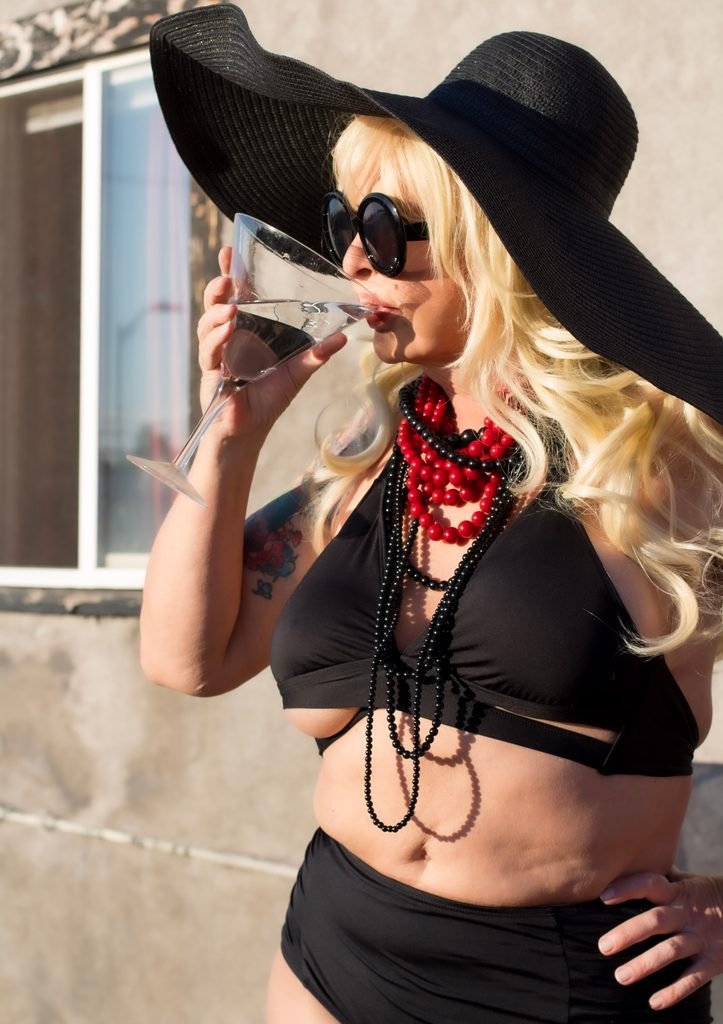
For all the outrageous stories, sharp comebacks, and wonderfully deranged characters that populate Tuesday Thomas’s world, what stays with you is her belief in people. Not some polished, sentimental version of humanity, but the messy, complicated, occasionally infuriating real thing.
Tuesday’s career is a reminder that being an outsider doesn’t have to mean standing alone, and that refusing to conform can become its own kind of creative freedom. She’s made an art form out of being exactly who she is, inviting audiences to laugh at life’s absurdities without losing sight of the people living through them.
Perhaps that’s what makes her comedy so compelling. Beneath the outrageousness is an insistence that everyone deserves to be seen, that nobody’s struggles need to be measured against someone else’s, and that humour can create connections where judgment might otherwise take hold.
In a world increasingly determined to put everyone into categories, Tuesday Thomas is a glorious argument for remaining impossible to categorize.
Long live the freaks, the outsiders, the troublemakers, and the women who refuse to behave.
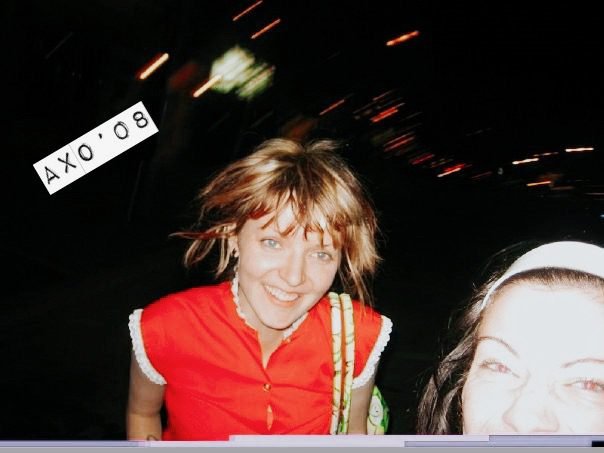
AXO (she/her) is a multidisciplinary creator and editor based in Toronto. She is the founder of She Zine Mag, Side Project Distro, BBLGM Club, and several other projects under the AXO&Co umbrella — each rooted in DIY culture, creative rebellion, and community care. Her work explores the intersection of craft, technology, and consciousness, with an emphasis on handmade ethics, neurodivergent creativity, and the politics of making. She is an advocate for accessible creativity and the power of small-scale cultural production to spark social change. Her practice merges punk, print, and digital media while refusing to separate the emotional from the practical. Above all, her work invites others to build creative lives that are thoughtful, defiant, and deeply handmade.