
















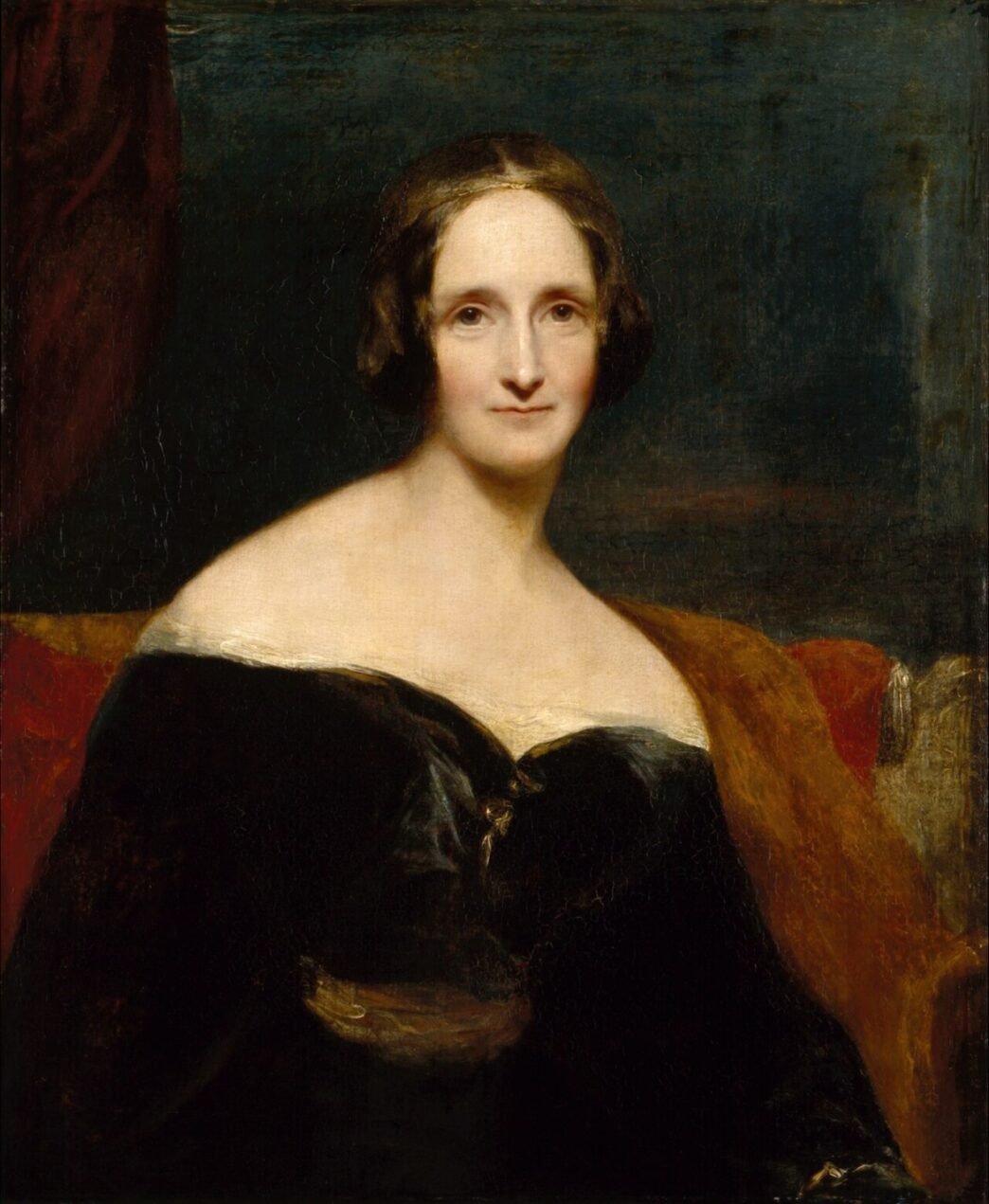
By Isha Sharma
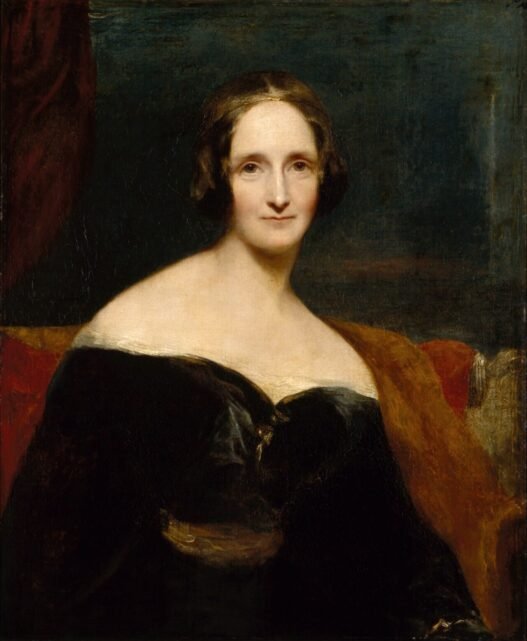
There’s so much beyond the Godwin-Wollstonecraft and Shelley tags that define Mary in both existence and remembrance. This piece is an attempt to find that woman of fortitude and celebrate how she metamorphosed the literary canon on her own.
“My dreams were all my own; I accounted for them to nobody; they were my refuge when annoyed – my dearest pleasure when free.” – Mary Shelley

I vividly remember the opening class of Frankenstein at university, where we were introduced to Mary Shelley, the daughter of two radicals, William Godwin and Mary Wollstonecraft and the wife of one of the greatest poets of the time, Percy Bysshe Shelley.
We were told about her mother’s passing away just 12 days after giving birth to her, her turbulent marriage to Percy Shelley, and her role as a foremother of science fiction, but nobody spoke of who Mary was beyond the celebrated figures that surrounded her.
I always knew Mary from the lens of others, leaving me with lingering questions on what it was like to be a child and then a woman in the face of a turbulent childhood and marriage. What about that hardship of moving beyond the shadow of not one but three esteemed figures? And then being a mother at 17, losing her child, and producing the greatest work of science fiction at 18?
And most importantly, hiding that burning fire inside of her under the veil of extreme love and care she had for others, including Percy, Claire Clairmont and her father William Godwin, without them returning those affections at all times.
Childhood and choices
Her childhood was filled with memories of her mother and her setting the feminist narrative in ‘A Vindication of the Rights of Woman’, inspiring Mary to hold opinions and unconventional choices, well knowing the repercussions. However, those memories also came with a sense of guilt coloured by a void of not getting a chance to live life with a woman who inspired every generation through her work. And therefore, she would often visit her mother’s grave to feel her embrace.
Interestingly, Wollstonecraft’s life and choices played on Mary’s journey too, as many of her choices replicated her mother’s. Mary too made the ‘unconventional’ choice of eloping with Percy, just like her mother’s scandalous marriage to William Godwin, on discovering her pregnancy.
I often fail to understand how the repercussions of the same actions performed by men and women can bear such different consequences. We often remember Wollstonecraft and her daughter for being ‘unconventional,’ but never do we point at Godwin or Percy like that, even though they were equally involved.
Romanticism & Relationships
Not to forget, it was the peak of Romanticism with ‘emotion’ dominating every thought, certainly Mary’s life. A believer in “people should live and love as they want” pushed Mary into choosing Percy as her partner, even though she was warned by Percy’s wife, Harriet Westbrook, about the “sacrifice required to love a man like Percy.” If Percy was the advocate of “free love”, Mary was the one burning under its consequences.
This decision challenged her at various intervals of her life, whether it was her father deserting her when she chose to be with Percy, losing her firstborn within 12 days of her birth or Percy’s many romantic relationships in his spirit against monogamy.
I feel that Mary’s life was impacted so profoundly by Shelley as it was by her stepsister Claire whom she loved dearly even though Claire, on multiple occasions, didn’t reciprocate that love and trust. She promised never to abandon Claire, taking her when she eloped with Shelley, but Claire went on to have an affair with Shelley under her sister’s nose.
Mary loved, but was met with disappointment at every hour. Isn’t she the abandoned child of history who will always be remembered for the privilege with which she was born, ignoring the price she paid for it throughout her life and beyond?
A last straw of this thread of abandonment was her losing her firstborn, Clara, who died 12 days after birth. She would often see her daughter in her dreams, inviting only misery to 17-year old Mary. Still a young girl herself, her suffering as a mother would meet her childhood self growing up without a mother.
It seems to me that she took all that suffering, anguish and filled it with the love and hope she had in her heart to say the truth of not just her life but of the world as she penned one of the greatest works of literature ever written.
Fortitude and Frankenstein
Mary was always fascinated by science, which in itself was a unique thing for a woman in the Romantic era, where reason and logic were opposed to appreciating emotion. And weren’t rationality and reasoning always reserved realms for men who defined the social world? While other writers of the time, including her own husband, were writing about nature and emotion, Mary’s mind was pushing her into narrating the sublime, the ghosts that often used to find home in her dreams.
And that’s how Frankenstein or the Modern Prometheus was born. To me, Frankenstein seems more like an autobiography that documents Mary’s loss, pain and fire all intermingled with one another. As Percy suggested her to make the monster virtuous, leaving society with hope, she rejects, claiming to reflect reality, the reality of her life.
It is at instances like this that I think of her as a woman of absolute conviction and courage. If Wollstonecraft was the pioneer of feminism, her daughter certainly led the movement in the right direction.
Her entire life, Mary struggled to find her voice amid the many popular voices that impacted her. As she covertly wrote and read ghost stories, she always knew what she wanted to do, but the pressures of legacy made her feel not equipped to do so.
There was a burning fire in her soul to put pen to paper, and when she finally did with Frankenstein, it became a victory for that little Mary trying her best to fit her parents’ established standards.
But even that journey came with its challenges. When she took the draft of Frankenstein to the publisher for the first time, there were apprehensions about the credibility of her authoring a narrative as bold and unprecedented as that. This was even made more controversial with the idea of a woman helming a narrative like Frankenstein, to which she responded,
“If I am old enough to bed children, I am old enough to put pen to paper. And you dare question a woman’s ability to experience loss, death, betrayal, all of which is present in this story, my story.” ( From Mary Shelley 2017 movie)
With a series of rejections from multiple publishers, Frankenstein was finally published anonymously on March 11, 1818, with Percy writing the introduction to the book. It was only in 1823 that the first English-language edition (the second edition) was published under Mary’s name.
I often think that had the book never been published under her name, the world would have never gotten to know about the prowess that she had been meaning to showcase for her entire existence.
Mary wasn’t a woman that society would refer to as a prototype, but the best part is, she never ever wanted to. She was fearless, ready to bear the consequences of her actions. If Frankenstein is the mirror of the world’s reality, Mary is the bearer of the gleam of hope that ever exists to fight darkness.
Whether it was Percy, Claire or Godwin, Mary impacted their lives more than the tags she is restricted to. She left her father proud as he himself arranged for the second edition to be published under her name. Most importantly, she influenced her own staying true to her words, “My choices made me who I am, and I regret nothing.”
What she left people like me with is a sense of hope and aspiration to rise beyond the station of our birth and make choices that feel right to us before anyone else.
As I pen my thoughts about her today, I want to remember Mary for the childhood she never had, the deep loss she held deep in her heart, the writings that never saw the light of day, and the fortitude she showed at every occasion as she put her heart’s fire to live and rise beyond everything and everyone history remembers her for.