














For most of us, to journey to adulthood follows a familiar script.
We start school as children, spend years moving from one classroom to the next. Eventually someone hands us a diploma and congratulates us on completing our education.
Neat and tidy and done like dinner.
Except, of course, we haven’t truly completed our education.
We start learning the some of the most valuable lessons in life long after we’ve left school behind.
They’re found in books we choose to read simply because they sound interesting, and not because they’ve been assigned. They’re hidden in conversations with strangers, documentaries watched on a rainy Sunday afternoon after the workday is done. They sneak up on us on trips to museums just because we felt like going and not because we’re on a field trip with 30 of our unruly classmate. They’re discovered through recipes we’ve never attempted before, languages we’re slowly learning to speak, and hobbies that challenge us to think in completely different ways.
Learning isn’t something that belongs to a particular season of life. It’s a lifelong habit that must be nutured, and perhaps one of the greatest gifts we can give ourselves.
Unfortunately, somewhere along the way, many of us stop seeing ourselves as learners. Adulting sneaks up on you and we tend to forget how to do invest in continued education as a joy, and not an obligation.
People get busy. Careers take over. Families need our attention. Daily routines settle into place. Before long, it’s easy to convince ourselves that we’ve learned everything we need to know.
But the world never stops changing.
New technologies appear almost overnight and if you don’t make an effort to stay informed, you’re suddenly the one looking at your devices in the same clueless way that you used to make fun of your parents for.
Remaining curious isn’t just enjoyable—it’s one of the best ways to stay connected to the world around us and to really be a part of things.
Learning doesn’t have to mean enrolling in university or earning another certificate. It can be wonderfully informal.
Read a biography of someone whose life looks nothing like your own and get inspired.
Take a class in watercolour painting even if you’ve never held a brush without being afraid to make a little bit of a mess.
Learn the names of the trees in your neighbourhood to make your afternoon walks more interesting.
Ask your grandparents about the world they grew up in and take wonder in how things have evolved, and are continuing to evolve.
Every one of these experiences expands the way you understand the world.
One of the most surprising things about lifelong learning is that it often teaches us far more than the subject itself.
For instance, learning something like photography teaches you to more carefully observe your surroundings. Learning to cook is like a science and teaches about patience. Learning history teaches you how to look at the world through another persons eyes. Learning music teaches discipline and persistence. Learning gardening teaches that some things simply need a lot of care that cannot be rushed
The lesson is rarely just the lesson.
That’s part of the magic. You’ll find that curiosity has a way of spilling into every corner of our lives and the more we learn, the easier it becomes to make connections between ideas that once seemed unrelated.
Knowledge rarely stays in neat little boxes.
It grows.
10 Ways to Embrace Lifelong Learning
The wonderful thing about lifelong learning is that it doesn’t require a classroom. Here are ten simple ways to keep your curiosity alive.
1. Read something you wouldn’t normally pick up.
Choose a biography if you usually read fiction. Pick up a science book if history is more your thing. Every new subject expands your perspective.
2. Learn one new skill each year.
It could be baking sourdough, embroidery, basic coding, woodworking, watercolours, or bird identification. The skill matters less than the willingness to begin.
3. Ask more questions.
Curious people aren’t afraid to admit they don’t know something. Questions are where learning begins.
4. Visit places designed for discovery.
Libraries, museums, galleries, botanical gardens, historical sites, and science centres exist to spark curiosity. Wander without a plan.
5. Talk to people outside your usual circle.
Everyone knows something you don’t. Conversations are often the best classrooms we’ll ever have.
6. Keep a learning journal.
Write down interesting facts, books you’d like to read, questions you want answered, or ideas that surprise you. Finding journal prompts is helpful. Curiosity grows when you pay attention to it.
7. Be willing to be a beginner.
Nobody enjoys feeling clumsy or failing along the way, but every expert started exactly where you are now. Progress only happens if you’re willing to make imperfect first attempts.
8. Make time for documentaries, lectures, and podcasts.
Not every lesson comes from a book. There has never been a better time to learn from experts around the world.
9. Learn by doing.
Plant a garden. Build a bookshelf. Sew a tote bag. Some knowledge only makes sense once your hands are involved.
10. Stay open to changing your mind.
One of the greatest signs of lifelong learning isn’t knowing all the answers—it’s being willing to rethink them when new information comes along.
One reason lifelong learning feels so rewarding is because it reminds us that we are never finished becoming ourselves.
Think about the people you admire. They’re often the ones who remain endlessly interested in the world. They recommend books with genuine excitement. They’re always trying something new. They ask thoughtful questions. They still light up when they discover a fascinating fact or an unexpected connection.
Age hasn’t made them cynical. It’s made them curious.
Look at the way they experience the world, not as aspirational, but as possible, if you’re just willing to start.
Research has consistently shown that continuing to learn throughout life benefits both our minds and our wellbeing. Challenging our brains with new ideas helps keep our memory active, improves problem-solving skills, and can even contribute to healthier cognitive ageing. Just as importantly, learning gives us something to look forward to. It creates momentum.
There’s a quiet optimism in believing there is always more to discover and it’s also worth remembering that learning isn’t always comfortable.
Sometimes a new book challenges beliefs we’ve held for years. Another culture might show us a completely different way of living. Being informed of the past forces us to rethink stories we thought we already understood.
That’s part of learning too.
Real growth isn’t about collecting facts—it’s about expanding our understanding of ourselves and others. Perhaps that’s why lifelong learners often seem so interesting. Not because they know everything, but because they know there’s always something else to discover.
They remain students of the world and notice the important details other people miss. They approach unfamiliar situations with curiosity instead of fear and understand that every person they meet knows something they don’t.
That’s a refreshing way to move through life.
And the truth is, none of us will ever finish learning.
There will always be another book to read, another skill to develop, another place to explore, another conversation that changes how we think.
And how wonderful is that?
Because the goal was never to know everything. It’s to keep growing, remain curious, and stay open.
Let yourself be surprised!
In the end, lifelong learning isn’t really about becoming smarter. It’s about becoming more engaged with the world around you.
And that’s a journey worth embracing at every age.
What are you learning right now?
Whether you’re teaching yourself to knit, finally tackling that stack of books on your nightstand, or falling down an unexpected Wikipedia rabbit hole, we’d love to hear about it.
Share your current obsession in the comments, tag us on social media, or send us a recommendation for something we should be learning next. After all, the best part of lifelong learning is that we don’t have to do it alone.
And don’t forget to sign up for our newsletter!
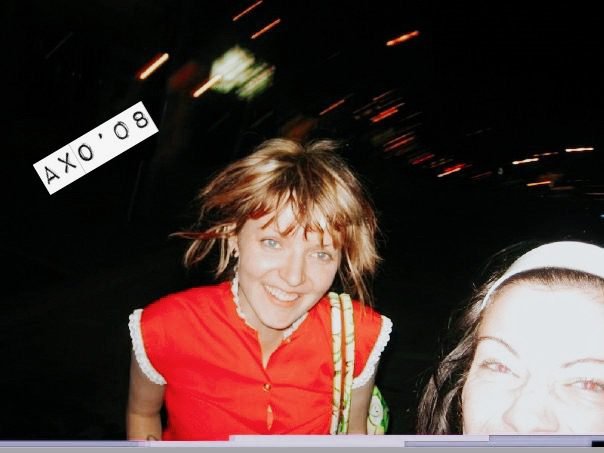
AXO (she/her) is a multidisciplinary creator and editor based in Toronto. She is the founder of She Zine Mag, Side Project Distro, BBLGM Club, and several other projects under the AXO&Co umbrella — each rooted in DIY culture, creative rebellion, and community care. Her work explores the intersection of craft, technology, and consciousness, with an emphasis on handmade ethics, neurodivergent creativity, and the politics of making. She is an advocate for accessible creativity and the power of small-scale cultural production to spark social change. Her practice merges punk, print, and digital media while refusing to separate the emotional from the practical. Above all, her work invites others to build creative lives that are thoughtful, defiant, and deeply handmade.






Your post is a true masterpiece. I\’ll be referencing it in my own work.
Your post is a true masterpiece. I\’ll be referencing it in my own work.
Your insights in this post are spot on. I can\’t wait to see what you write next!
Your insights in this post are spot on. I can\’t wait to see what you write next!
I\’m glad you enjoyed it! Your kind words inspire me to keep creating informative content.
I\’m glad you enjoyed it! Your kind words inspire me to keep creating informative content.