











Disclaimer: This article is for educational and informational purposes only. It’s not medical advice and shouldn’t replace guidance from a qualified healthcare professional. Everyone’s body and cycle are different — listen, learn, and consult a trusted provider if something feels off. The goal here isn’t to diagnose or “fix” yourself, but to understand and collaborate with your own biology.

There’s a lot of noise about “listening to your body,” but body literacy goes deeper than wellness catchphrases. It’s about understanding your body’s signals — hormones, moods, energy, and cycles — as data. Real, actionable information you can use to make decisions, set boundaries, and build your life around your biology instead of fighting against it.
The Hidden Curriculum of Being in a Body
Most of us were taught the bare minimum about our reproductive systems: menstruation equals “the period,” and everything in between is a mysterious blur of PMS and potential pregnancy. That lack of education isn’t accidental — it’s cultural. Body ignorance keeps people (especially women and gender-diverse folks) disconnected from their power. When you don’t know how your cycle works, you can’t advocate for better care, communicate clearly about your needs, or design a life that honours your energy patterns.
Body literacy flips that script. It’s a form of rebellion disguised as self-awareness.
Your Cycle Is a Vital Sign
Think of your menstrual cycle like your body’s built-in operating system. Just like heart rate and blood pressure, it’s a vital sign that reflects your overall health. The phases — menstrual, follicular, ovulatory, and luteal — each come with distinct hormonal shifts that affect mood, focus, creativity, and energy. When you track these patterns, you start noticing cause-and-effect relationships: why you’re unstoppable in week two, introspective in week four, or suddenly craving solitude.
Apps and wearables can help you track all this, but not all of them treat your body like the intelligent system it is. Below are some that actually get it — the tools that make body literacy a lifestyle, not a spreadsheet. And PS.. there are no affiliate links in this post.
10 Apps That Put You Back in Tune With Your Body
Female founded/led companies have been highlighted
1. Clue (Co-founded by Ida Tin) – A science-driven, inclusive cycle tracker that turns your hormones into a readable rhythm. Perfect for anyone who wants accuracy without pink fluff.
2. Flo – Tracks periods, fertility, and symptoms while offering insight into sleep, mood, and cycle health. Think of it as your hormonal weather app.
3. Read Your Body (Founded by Laura Robson) – A privacy-first, open-source tracker designed for full body literacy. It encourages interpretation over prediction — you decide what your data means.
4. MeetYou – A simple, intuitive tracker with over 300 million users worldwide. Great for anyone starting to connect the dots between mood and menstruation.
5. Period Calendar – A straightforward, beginner-friendly option that helps you visualize flow, fertility, and symptom patterns without overwhelming detail.
6. Bearable – Goes beyond periods, letting you log mood, pain, sleep, and medication. You can finally see how stress or bad sleep messes with your energy and cycle.
7. Daylio – A micro-journal that tracks mood and habits through emojis and quick taps. You’ll start noticing trends like, “I’m always more creative during week two.”
8. Instant – A self-tracking app that quietly maps how your lifestyle (screen time, travel, movement) interacts with your body’s rhythms. Context is everything.
9. Stardust (CEO & co-founder Rachel Moranis, and co-founder Molly Young) – A feminist favourite that blends lunar cycles, astrology, and hormone data. A little witchy, a little nerdy — and totally body-positive.
10. Habitify / Way of Life / Habit Tracker – These habit-tracking apps aren’t about your hormones directly, but they help you practice awareness. Log your check-ins, rest days, and creative bursts. The habit of noticing is half the work.
Knowledge as Resistance
Learning about your cycle isn’t just about self-improvement — it’s about liberation. It reclaims knowledge that’s been medicalized, stigmatized, and hidden. Historically, menstrual cycles were seen as weaknesses or inconveniences to be managed, not as systems of intelligence. But knowing your rhythm is knowing your strength.
When you understand your body’s timeline, you can work with it instead of against it — aligning big presentations, creative sprints, or rest days with your hormonal flow. It’s the ultimate productivity hack that doesn’t involve caffeine or burnout.
Beyond the Binary
Body literacy isn’t just for people with uteruses or cycles. It’s about cultivating awareness — learning how stress, nutrition, movement, and rest affect your physical and emotional balance. Everyone benefits from understanding their body’s signals.
But for those who do cycle, this knowledge can be revolutionary. It gives you language — for doctors, partners, employers, and yourself. It allows you to reject the myth that you’re inconsistent or “too emotional.” You’re cyclical, not chaotic.
Power in Pattern
Knowing your cycle doesn’t mean you have to turn into a walking spreadsheet of hormones. It means tuning in enough to see your body as a collaborator, not an obstacle. Power isn’t just loud or linear — sometimes it’s quiet, rhythmic, and grounded in knowing when to push and when to pause.
Body literacy is the blueprint for that kind of power — the kind that begins within, grows with awareness, and ripples out into every choice you make.
By tuning into your body’s natural intelligence, you’re not just learning biology, you’re reclaiming autonomy. Each tracked day, each note about energy or emotion, is an act of resistance against systems that profit from your disconnection. Knowledge is power, and your cycle is the map.
Learn your patterns. Track your power. Reclaim your body’s data.
→ Subscribe to The Edit — feminist health, cycle care, and rebellious self-knowledge in your inbox.
Sources:
Clue. “The menstrual cycle: more than just the period.” https://helloclue.com/articles/cycle-a-z/the-menstrual-cycle-more-than-just-the-period
National Center for Biotechnology Information (NCBI). “Physiology, Ovulation.” https://www.ncbi.nlm.nih.gov/books/NBK279054/
Flo Health. “Hormone levels during your menstrual cycle.” https://flo.health/menstrual-cycle/health/period/hormone-levels-during-cycle
Egyptian Journal of Otolaryngology. “Impact of menstrual cycle on auditory function.” https://ejo.springeropen.com/articles/10.1186/s43163-023-00421-3
The menstrual cycle as a vital sign: a review. The Lancet Regional Health – Americas / ScienceDirect (2024). https://www.sciencedirect.com/science/article/pii/S2666571924000380
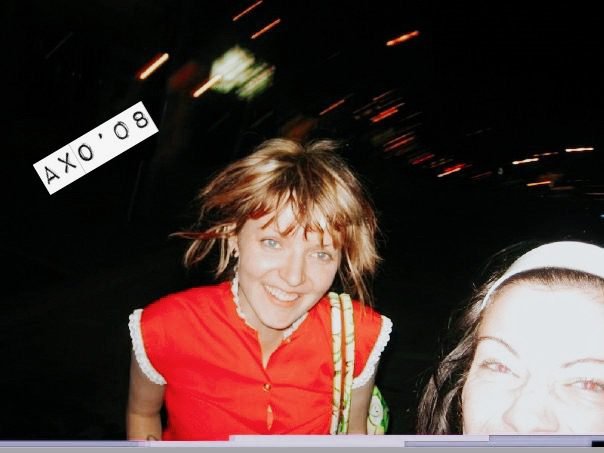
AXO (she/her) is a multidisciplinary creator and editor based in Toronto. She is the founder of She Zine Mag, Side Project Distro, BBLGM Club, and several other projects under the AXO&Co umbrella — each rooted in DIY culture, creative rebellion, and community care. Her work explores the intersection of craft, technology, and consciousness, with an emphasis on handmade ethics, neurodivergent creativity, and the politics of making. She is an advocate for accessible creativity and the power of small-scale cultural production to spark social change. Her practice merges punk, print, and digital media while refusing to separate the emotional from the practical. Above all, her work invites others to build creative lives that are thoughtful, defiant, and deeply handmade.